
In today’s world, long sitting has quietly become one of the biggest health risks. Whether you are working a desk job, studying for exams, gaming, or scrolling on your phone, you may be sitting for hours without realizing how it is affecting your body. Many people think that as long as they exercise for a short time daily, they are safe. The truth is, prolonged sitting can still harm your health even if you work out. This detailed guide explains the side effects of long sitting, why it is dangerous, and most importantly, how to prevent it.
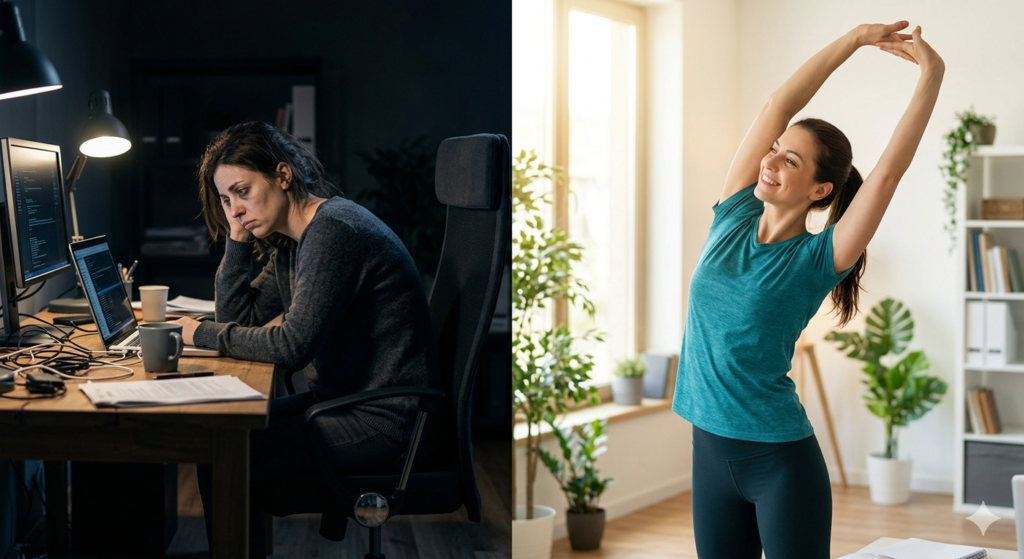
What Is Long Sitting or Sedentary Lifestyle?
Long sitting refers to staying seated for extended periods with little or no movement. A sedentary lifestyle means low physical activity throughout the day. This includes office work at a desk, watching TV for hours, using laptops or mobile phones continuously and driving for long periods. If you sit for more than 6 to 8 hours daily, you are considered to have a sedentary lifestyle.
Why Long Sitting Is Dangerous
The human body is designed to move. When you sit for long hours, your muscles become inactive, your metabolism slows down, and your blood circulation decreases. Over time, this leads to multiple health issues. Many people want to understand “why is sitting badly for health” or “effects of sedentary lifestyle”. The answer is simple inactivity affects almost every system in your body.
Major Side Effects of Long Sitting
Some of the major side effects of long sitting are given as below:
1. Back Pain and Poor Posture
One of the most common problems is chronic back pain. Sitting for long hours, especially with poor posture, puts pressure on your spine.
Effects include: Lower back pain, Neck stiffness, Rounded shoulders and Spinal misalignment. Over time, this can lead to long term posture problems.
2. Weight Gain and Obesity
When you sit for long periods, your body burns fewer calories. This slows down your metabolism and leads to fat accumulation. People who want to understand about “does sitting cause weight gain” often do not realize that inactivity plays a major role in obesity.
Effects include: Increased belly fat, slower metabolism and Difficulty losing weight.
3. Increased Risk of Heart Disease
Long sitting has been linked to cardiovascular problems. When blood circulation slows down, it affects heart health.
Possible risks: High blood pressure, Poor blood flow and increased cholesterol levels. Even regular exercise cannot fully cancel out the effects of prolonged sitting.
4. Muscle Weakness
Sitting for long hours weakens important muscle groups, especially Core muscles, Glutes and Leg muscles. Weak muscles can lead to poor stability and increase the risk of injuries.
5. Diabetes Risk
Research shows that prolonged sitting increases the risk of type 2 diabetes. When you sit too long, your body becomes less effective at using insulin.
Effects include: Increased blood sugar levels and Insulin resistance
6. Mental Health Issues
Long sitting not only affects physical health but also mental well-being.
Common issues: Anxiety, Depression and Low energy levels. Spending too much time sitting indoors can reduce exposure to sunlight and social interaction.
7. Poor Blood Circulation
Sitting for extended periods slows blood flow, especially in the legs. This can lead to swollen ankles, numbness in legs and risk of blood clots.
8. Increased Risk of Early Death
Studies suggest that people who sit for long hours daily have a higher risk of early mortality compared to those who stay active. This is why many experts call sitting “the new smoking”.
Signs You Are Sitting Too Much
You may not realize how much you sit daily. Here are some warning signs:
- Frequent back or neck pain
- Feeling tired despite doing little work
- Weight gain without overeating
- Stiffness in joints
- Low energy levels
If you experience these, it is time to change your habits.
Prevention Tips for Long Sitting
Now comes the most important part – how to reduce the harmful effects of sitting. If you are want to understand “how to stay active at desk job” or “tips to reduce sitting time”, these practical strategies will help.
1. Follow the 30-30 Rule
Every 30 minutes, stand up and move for at least 30 seconds.
Simple activities: Stretch your arms and legs, walk around your room or do light movements. This improves circulation and reduces stiffness.
2. Use a Standing Desk
Standing desks are becoming popular for a reason. They allow you to alternate between sitting and standing.
Benefits:
- Better posture
- Increased energy
- Reduced back pain
3. Practice Good Sitting Posture
If you must sit, sit correctly.
Tips:
- Keep your back straight
- Feet flat on the ground
- Screen at eye level
- Avoid slouching
4. Stay Physically Active
Daily exercise is essential to counter the effects of sitting.
Recommended activities: Walking, Jogging, Cycling and Strength training. Aim for at least 30 minutes of physical activity daily.
5. Stretch Regularly
Stretching keeps your muscles flexible and prevents stiffness.
Important stretches: Neck stretch, Shoulder rolls, Hamstring stretch and Back stretch.
6. Take Walking Breaks
Instead of scrolling your phone during breaks, walk around.
Ideas: Walk while taking calls, take stairs instead of elevators and walk after meals.
7. Stay Hydrated
Drinking water encourages you to get up frequently for refills or bathroom breaks. It also helps to maintain energy levels and improve metabolism.
8. Limit Screen Time
Excessive screen time often leads to prolonged sitting. Try to set screen time limits, take digital detox breaks and avoid long binge watching sessions.
9. Use Reminders or Apps
Sometimes you forget to move. Use reminders to stay active. Some options are phone alarms, fitness apps and smartwatch alerts.
10. Improve Workplace Ergonomics
A proper workstation setup can reduce strain on your body.
Checklist:
- Comfortable chair with support
- Proper desk height
- Adjustable monitor
Best Daily Routine to Avoid Long Sitting
Here is a simple routine you can follow:
- Morning: Light stretching or walk
- Work hours: Move every 30 minutes
- Lunch: Take a short walk
- Evening: Exercise or outdoor activity
- Night: Limit screen time
Consistency is key.
Long Sitting and Remote Work
With remote work becoming common, many people sit even more than before.
Tips for remote workers:
- Create a dedicated workspace
- Avoid working from bed
- Schedule movement breaks
- Stay disciplined with routine
Statistics on Long Sitting
| Statistic | Value | Source Insight |
| Average daily sitting time (adults) | 7–8 hours | Common in modern lifestyles |
| Risk threshold for harmful sitting | >8 hours/day | Linked to higher mortality risk |
| Physical activity needed to offset sitting | 60–75 min/day | Can reduce health risks |
| Increase in neck pain risk | ~88% higher (>6 hrs sitting) | Sedentary posture impact |
| Global physical inactivity rate | ~31% of people | Major public health concern |
| Mortality risk with excessive TV sitting | Up to 2× higher | Compared to low sitting time |
Final Thoughts
Long sitting may seem harmless, but its effects can be serious over time. From back pain to heart disease and mental health issues, a sedentary lifestyle impacts your overall well-being. The good news is that small changes can make a big difference. By staying active, improving posture, and taking regular breaks, you can protect your health and feel more energetic throughout the day.
FAQs:
1. How often should I take breaks from sitting?
You should take a break every 30 to 60 minutes. Even a short 1 to 2 minute walk or stretch can reduce the negative effects of long sitting.
2. Can standing all day replace sitting?
No, standing all day is not a perfect solution. The best approach is to alternate between sitting, standing, and moving throughout the day.
3. What are the best exercises to counter long sitting?
Simple exercises like walking, stretching, squats, lunges, and light cardio are effective in reducing stiffness and improving blood flow.
4. Does long sitting affect digestion?
Yes, sitting for long periods can slow digestion and may lead to issues like bloating, constipation, and acid reflux.
5. Is walking enough to offset sitting all day?
Walking helps a lot, but it is not enough if you sit continuously for long hours. You should combine walking with regular breaks and overall daily movement.
