
If you spend hours sitting at a desk, staring at a screen, and barely moving except to grab coffee, you are not alone. Millions of office workers deal with stiff necks, tight shoulders, lower back pain, and poor posture every single day. The good news is that you do not need a gym membership or complicated routines to fix it. Simple stretching exercises for office workers can make a huge difference. In this detailed guide, you will learn the best stretching exercises for office workers, how to do them correctly, when to do them, and how they help reduce pain and improve your health.
Why Stretching is Important for Office Workers
Before jumping into exercises, let’s understand why stretching matters. Sitting for long hours leads to tight hip flexors, weak glutes, rounded shoulders, forward head posture and reduced blood circulation.
These issues can cause chronic back pain, neck stiffness, shoulder tension, reduced productivity, fatigue and low energy. Regular stretching improves flexibility and mobility, blood flow and oxygen delivery, posture and alignment, focus and mental clarity. If you want to know about relieve back pain at work or easy stretches for desk workers, this guide covers everything you need.
How Often Should Office Workers Stretch?
For best results stretch every 60 to 90 minutes, each stretch should last 15 to 30 seconds and repeat each stretch 2 to 3 times. Consistency is more important than intensity.
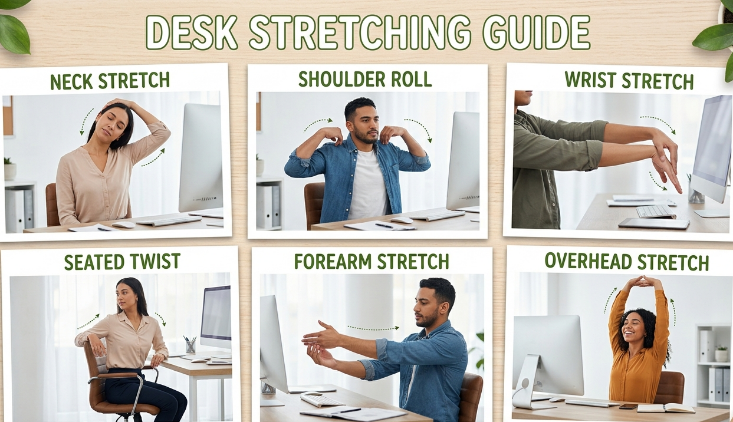
1. Neck Stretch (Best for Neck Pain and Stiffness)
A simple and effective stretch to release built-up tension in the neck and improve flexibility during long work hours.
Why it helps: One of the most common problems for desk workers is neck strain from constantly looking at screens or holding the same position for too long. This stretch helps loosen tight neck muscles and reduces stiffness.
How to do it: Sit or stand upright with your spine straight. Slowly tilt your head toward your right shoulder without raising your shoulder. Hold for 15 to 20 seconds, then gently return to the center. Repeat on the other side.
Pro tip: Do not force the stretch or apply pressure. Keep movements slow and controlled for best results.
2. Shoulder Roll Stretch (Relieves Shoulder Tension)
A quick and easy movement to release tightness in the shoulders and improve upper body mobility during long desk hours.
Why it helps: Typing, scrolling, and constant mouse use can cause your shoulders to become stiff and tense. This stretch helps loosen those muscles and improves blood flow.
How to do it: Sit straight with your back aligned. Lift your shoulders toward your ears, then roll them backward in a smooth circular motion. Repeat 10 times, then switch direction and roll forward. This is one of the easiest quick office stretches you can do without leaving your desk.
3. Chest Opener Stretch (Fix Rounded Shoulders)
A powerful stretch that helps counteract slouching and opens up the front of your body.
Why it helps: Sitting for long hours causes your chest muscles to tighten and your shoulders to roll forward, leading to poor posture and discomfort.
How to do it: Clasp your hands behind your back and straighten your arms. Gently lift your chest and pull your shoulders back. Hold for 20 to 30 seconds while breathing normally.
Benefits:
- Improves posture
- Opens the chest
- Reduces upper back tension
4. Seated Spinal Twist (Great for Lower Back Pain)
A gentle stretch that improves spinal mobility and relieves pressure built up from sitting.
Why it helps: Sitting for extended periods compresses your spine and limits movement, which can lead to stiffness and lower back pain.
How to do it: Sit upright in your chair. Place your right hand on the back of the chair. Twist your torso to the right. Hold for 20 seconds. Repeat on the other side. This is one of the best stretches for lower back pain at work.
5. Wrist and Finger Stretch (Essential for Typing Fatigue)
A simple but important stretch to reduce strain from repetitive typing and device use.
Why it helps: Typing all day puts stress on your wrists and fingers.
How to do it: Extend one arm forward with your palm facing down. Use your other hand to gently pull your fingers downward until you feel a stretch. Hold for 15 seconds, then switch hands.
Benefits:
- Helps prevent carpal tunnel symptoms
- Reduces wrist and finger stiffness
6. Hip Flexor Stretch (Fix Sitting Damage)
An essential stretch to reverse the negative effects of prolonged sitting on your hips.
Why it helps: Sitting shortens your hip flexors, which can lead to tight hips, poor posture, and lower back pain.
How to do it: Stand up. Take a step forward into a lunge position. Keep your back straight. Push your hips forward slightly. Hold for 20 to 30 seconds. This is a must-do if you want to know about hip stretches for office workers.
7. Hamstring Stretch (Improves Flexibility)
A great stretch to loosen tight leg muscles and support better posture.
Why it helps: Tight hamstrings can pull on your lower back, contributing to discomfort and reduced mobility.
How to do it: Sit on the edge of your chair and extend one leg forward with your heel on the ground. Keep your back straight and gently lean forward from your hips. Hold for about 20 seconds, then switch legs.
8. Standing Side Stretch (Boosts Mobility and Energy)
A refreshing stretch that improves flexibility and helps re-energize your body during the day.
Why it helps: This movement opens up the sides of your body, improves breathing, and reduces stiffness from sitting in one position.
How to do it: Stand up tall and raise one arm overhead. Slowly lean to the opposite side while keeping your body aligned. Hold for 15 to 20 seconds, then switch sides.
Bonus: This is a great midday energy booster stretch that helps you feel more active and alert.
9. Upper Back Stretch (Relieves Desk Hunch)
A simple stretch to correct rounded shoulders and relieve tension in the upper back.
Why it helps: Sitting for long periods often causes your upper back to round forward, leading to tightness and discomfort.
How to do it: Clasp your hands in front of you with your arms extended. Push your arms forward and gently round your upper back. Hold for 20 seconds while breathing deeply.
10. Calf Stretch (Improves Circulation)
An effective stretch to boost blood flow and reduce stiffness in your lower legs.
Why it helps: Sitting for long hours can reduce circulation in your legs, leading to tight calves and discomfort.
How to do it: Stand facing a wall and place one foot behind you. Keep your back leg straight and your heel on the ground. Lean forward slightly until you feel a stretch in your calf. Hold for 20 seconds, then switch legs.
Do’s and Don’ts of Stretching for Office Workers
| Do’s | Don’ts |
| Stretch every 60 to 90 minutes | Sit for 4 to 6 hours without moving |
| Keep movements slow and controlled | Bounce or force your stretches |
| Breathe deeply and stay relaxed | Hold your breath while stretching |
| Maintain good posture while stretching | Slouch or twist aggressively |
| Focus on consistency daily | Stretch only once in a while |
| Start with light warm-up movements | Jump into deep stretches immediately |
| Listen to your body’s limits | Push through sharp pain |
Quick 5 Minute Office Stretch Routine
If you are short on time, follow this simple routine:
- Neck stretch: 30 seconds
- Shoulder rolls: 1 minute
- Chest opener: 30 seconds
- Seated twist: 1 minute
- Hamstring stretch: 1 minute
- Wrist stretch: 1 minute
This routine is perfect for people who want 5 minute stretch routine at desk.
Tips to Maximize Results
Simple habits and small adjustments that can significantly enhance the effectiveness of your stretching routine and overall workplace wellness.
- Set Reminders: Use your phone, smartwatch, or productivity apps to remind you to stretch every hour. Regular reminders help build a consistent habit, especially during busy workdays when it is easy to forget to move.
- Maintain Good Posture: Stretching is effective, but maintaining proper posture throughout the day is just as important. Keep your screen at eye level to avoid neck strain, sit with your back straight and supported, and make sure your feet stay flat on the ground to reduce pressure on your lower back.
- Stay Hydrated: Drinking enough water keeps your muscles hydrated and more flexible. Dehydration can lead to muscle stiffness and fatigue, so keep a water bottle at your desk and take small sips throughout the day.
- Combine with Movement:. Stretching works even better when combined with light movement. Take short walks during breaks, stand up when possible, or do simple movements like pacing during phone calls to keep your body active and improve circulation.
Common Mistakes to Avoid
Avoiding these common stretching mistakes can help you get better results, prevent injuries, and make your routine more effective over time.
- Holding your breath while stretching: Many people unknowingly hold their breath, which can create tension in the body. Always breathe slowly and deeply to help your muscles relax and stretch more effectively.
- Stretching too aggressively: Pushing too hard or forcing a stretch can lead to muscle strain or injury. Stretch to a point of mild tension, not pain, and keep your movements controlled.
- Skipping warm up movement: Jumping straight into deep stretches without any movement can increase the risk of injury. Start with light movements like shoulder rolls or walking in place to prepare your muscles.
- Being inconsistent: Stretching once in a while will not give long-term benefits. Consistency is key, so try to make stretching a daily habit, even if it is just a few minutes each day.
Benefits of Daily Stretching for Office Workers
If you stick to a daily stretching routine, you will notice:
- Regular stretching helps release muscle tension and reduces stiffness caused by prolonged sitting.
- It corrects muscle imbalances and helps your body maintain proper alignment throughout the day.
- Improved blood circulation helps you feel more active, refreshed, and less fatigued.
- When your body feels better, it becomes easier to focus and stay efficient at work.
- Stretching relaxes both your muscles and mind, helping lower stress and mental fatigue.
Many people searching for ways to reduce office fatigue naturally find that daily stretching is one of the simplest and most effective solutions to stay healthy and productive.
Final Thoughts
You do not need a complicated fitness plan to feel better at work. Just a few minutes of stretching throughout the day can completely transform how your body feels. Start small. Pick 3 to 5 stretches from this guide and do them consistently. Over time, you will notice less stiffness, better posture, and more energy. If you are serious about improving your health while working a desk job, stretching is not optional. It is essential.
FAQs:
1. How often should office workers stretch?
Every 60 to 90 minutes during the workday for best results.
2. Can stretching reduce back pain from sitting?
Yes, regular stretching helps relieve tension and improves posture, reducing back pain.
3. How long should I hold each stretch?
Hold each stretch for 15 to 30 seconds and repeat 2 to 3 times.
4. Are desk stretches effective?
Yes, simple desk stretches can improve flexibility, reduce stiffness, and boost circulation.
5. Can stretching improve posture?
Yes, stretching loosens tight muscles and helps your body maintain better alignment.
