
Sitting at a desk for 8 or more hours a day has become the norm for millions of people. Whether you work in an office, remotely from home, or in a hybrid setup, a sedentary lifestyle can slowly take a toll on your health. From weight gain and poor posture to fatigue and low energy levels, the effects of a desk job are real.
The good news is that staying fit with a desk job is absolutely possible. You do not need a full lifestyle overhaul or hours in the gym every day. With smart habits, consistent movement, and mindful choices, you can stay healthy, active, and energized even with a busy work schedule. This detailed guide will walk you through practical strategies, fitness tips, and daily habits to help you stay fit while working a desk job.
Why Desk Jobs Affect Your Health
Before diving into solutions, it is important to understand the problem. Sitting for long hours leads to reduced calorie burn, slower metabolism, poor posture and back pain, increased risk of obesity, higher chances of heart disease and mental fatigue and stress.
When your body stays inactive for long periods, your muscles weaken and your energy levels drop. This is why many office workers feel tired even though they have not done physically demanding work.
1. Start Your Day with Movement
One of the most effective ways to stay fit with a desk job is to begin your day with some form of physical activity. When you move your body in the morning, you activate your muscles, improve blood flow, and set a healthy tone for the rest of the day.
Morning routine ideas: 15 to 30 minutes of walking or jogging, light stretching or yoga and bodyweight exercises like squats, push-ups, and lunges. This helps activate your muscles and boosts your metabolism early in the day.
2. Follow the 30-30 Rule
If you sit for long hours, your body can become stiff and sluggish. That is where the 30-30 rule becomes extremely useful. The idea is simple: every 30 minutes, take at least 30 seconds to move your body.
Set a timer or reminder to: Stand up, stretch your arms and legs and walk around your workspace. This habit improves blood circulation and reduces stiffness.
3. Optimize Your Workspace for Better Posture
Your workspace setup has a direct impact on your physical health. Poor posture is one of the biggest problems for desk workers and can lead to chronic pain over time.
Ergonomic tips:
- Sit with your back straight and supported
- Keep your shoulders relaxed, not hunched
- Place your feet flat on the floor
- Use a chair with proper lumbar support
You can also consider adding a cushion or lumbar roll if your chair does not provide enough support.
4. Do Simple Desk Exercises
You do not need a gym membership to stay fit. There are many exercises you can perform right at your desk without drawing attention or needing equipment.
Easy desk exercises: Seated leg raises, shoulder rolls, neck stretches, chair squats and desk push-ups. Doing these throughout the day keeps your muscles engaged.
5. Stay Hydrated Throughout the Day
Hydration plays a major role in maintaining your overall health and fitness, especially during long work hours. Many people underestimate how important water is for energy, digestion, and focus.
Benefits of hydration:
- Improves concentration and mental clarity
- Supports metabolism and digestion
- Helps control unnecessary hunger and cravings
- Reduces fatigue and headaches
Keep a reusable water bottle on your desk as a visual reminder. You can also set hydration goals or use apps to track your water intake.
6. Choose Healthy Snacks
Snacking during work is very common, but the type of snacks you choose can either support your fitness goals or harm them. Processed snacks, sugary drinks, and junk food can lead to weight gain and energy crashes.
Healthy snack options: Nuts and seeds, fresh fruits, yogurt and whole grain crackers. Avoid sugary drinks and processed snacks as much as possible.
7. Take Walking Breaks
Instead of spending your break time sitting or scrolling through your phone, use it as an opportunity to move your body. Walking is one of the simplest and most effective ways to stay active.
Simple ideas: Walk around the office, take stairs instead of elevators and go for a short outdoor walk. Even 5 to 10 minutes of walking can make a big difference.
8. Use a Standing Desk if Possible
Standing desks have become increasingly popular among professionals who want to reduce sitting time. They allow you to alternate between sitting and standing throughout the day, which is much healthier than staying in one position.
Benefits:
- Reduces lower back pain
- Encourages better posture
- Burns slightly more calories than sitting
- Keeps you more alert and engaged
If a standing desk is not available, try standing during phone calls or meetings.
9. Incorporate Stretching into Your Routine
Stretching is essential for maintaining flexibility and preventing muscle tightness caused by long hours of sitting.
Key stretches:
- Hamstring stretch for your legs
- Shoulder stretch to release upper body tension
- Wrist stretch for typing related strain
- Neck stretch to reduce stiffness
Stretching regularly not only improves mobility but also helps relieve stress and tension in your body.
10. Plan Regular Workouts after Work
While staying active during the day is important, dedicated workouts are still necessary for long term fitness.
Workout ideas:
- Gym training for strength and endurance
- Home workouts using minimal equipment
- Outdoor activities like cycling or running
- Group fitness classes for motivation
Try to schedule your workouts just like meetings so you stay consistent. Aim for at least 3 to 5 sessions per week.
11. Focus on Nutrition and Balanced Diet
Your diet plays a major role in your ability to stay fit with a desk job. Even if you exercise regularly, poor eating habits can slow your progress.
Healthy eating tips:
- Include protein, healthy fats, and complex carbs in meals
- Avoid skipping meals, especially breakfast
- Reduce intake of processed and fast food
- Control portion sizes
Meal prepping can be a game changer. Preparing your meals in advance helps you stay on track and avoid unhealthy last minute choices.
12. Improve Your Sleep Quality
Sleep is often overlooked, but it is essential for recovery, energy, and overall health. Poor sleep can lead to weight gain, low productivity, and increased stress.
Tips for better sleep:
- Stick to a consistent sleep schedule
- Avoid screens at least 30 minutes before bed
- Create a calm and relaxing bedtime routine
- Keep your sleeping environment comfortable
Getting 7 to 8 hours of quality sleep helps your body recover and perform better during the day.
13. Manage Stress Effectively
Stress is a common issue in desk jobs, and it can negatively impact both mental and physical health. If not managed properly, stress can lead to overeating, lack of motivation, and fatigue.
Stress management techniques: Deep breathing exercises, meditation, short breaks and listening to music. Keeping stress under control helps you stay consistent with your fitness goals.
14. Track Your Activity and Progress
Tracking your progress helps you stay motivated and accountable. When you can see your activity levels, you are more likely to stay consistent.
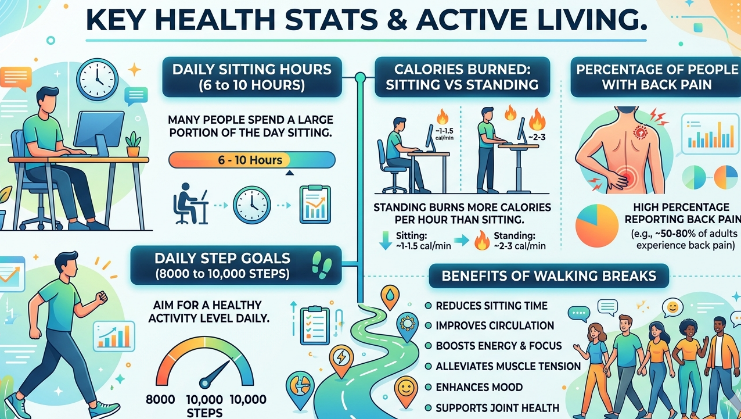
Tools you can use: Fitness apps, smartwatches and step counters. Set realistic goals like 8000 to 10000 steps per day.
15. Build Consistency, Not Perfection
The most important part of staying fit with a desk job is consistency. You do not need to follow every tip perfectly. What matters is showing up daily and making small improvements.
Keep this in mind:
- Move more throughout the day
- Sit less whenever possible
- Eat better consistently
- Stay patient with your progress
Over time, these small habits will lead to big results.
Desk Job Health and Fitness Statistics
| Category | Key Statistic | What It Means for You |
| Daily Sitting Time | Average office worker sits 6 to 10 hours per day | Long sitting hours increase risk of weight gain and poor posture |
| Calorie Burn | Sitting burns about 80 to 100 calories per hour | Lower calorie burn can lead to gradual fat gain |
| Break Impact | Taking movement breaks every 30 minutes can improve circulation by up to 30 percent | Regular breaks help reduce stiffness and fatigue |
| Step Count | Less than 5000 steps per day is considered sedentary | Aim for 8000 to 10000 steps for better health |
| Posture Issues | Around 70 percent of desk workers experience back or neck pain | Poor ergonomics can lead to long term spine problems |
| Hydration | Even mild dehydration can reduce productivity by up to 20 percent | Drinking enough water improves focus and energy |
| Exercise Recommendation | At least 150 minutes of moderate exercise per week is recommended | Helps maintain weight and overall fitness |
| Standing vs Sitting | Standing burns about 20 to 50 more calories per hour than sitting | Small changes can add up over time |
| Productivity Boost | Short walks can improve creativity and productivity by up to 60 percent | Movement helps mental performance |
| Sleep and Weight | Poor sleep increases risk of weight gain by up to 55 percent | Quality sleep is essential for fitness and recovery |
Final Thoughts
Staying fit with a desk job is not about making drastic changes. It is about building small, sustainable habits that fit into your daily routine. From simple desk exercises and walking breaks to proper nutrition and regular workouts, every step counts. If you start implementing even a few of these strategies today, you will notice improvements in your energy, productivity, and overall health.
FAQs:
1. How can I stay fit while working a desk job all day?
You can stay fit by taking regular breaks, doing simple desk exercises, walking whenever possible, and maintaining a healthy diet. Even small movements throughout the day make a big difference.
2. What are the best exercises to do at a desk?
Some effective desk exercises include chair squats, seated leg raises, shoulder rolls, neck stretches, and desk push-ups. These help keep your body active without needing a gym.
3. How often should I take breaks from sitting?
It is recommended to take a short break every 30 to 60 minutes. Stand up, stretch, or walk around for at least 30 seconds to 2 minutes to improve circulation and reduce stiffness.
4. Can I lose weight with a desk job?
Yes, you can lose weight with a desk job by staying active, eating a balanced diet, controlling calorie intake, and exercising regularly. Consistency is key to seeing results.
5. Is a standing desk better than sitting all day?
A standing desk can be helpful because it reduces long sitting hours and improves posture. However, the best approach is to alternate between sitting and standing throughout the day.
