
In today’s always-connected world, screens are everywhere. From smartphones and laptops to tablets and smart TVs, we spend a large part of our day staring at digital devices. While technology has made life easier, it has also introduced new challenges for our health, especially when it comes to sleep.
If you have ever struggled to fall asleep after scrolling through your phone or binge-watching videos late at night, you are not alone. Screen time has a powerful effect on your sleep cycle, and understanding how it works can help you improve your rest and overall well-being.
Understanding the Sleep Cycle
Before diving into screen time effects, it is important to understand what your sleep cycle actually is. Your sleep cycle is controlled by your internal body clock, also known as your circadian rhythm. This natural system regulates when you feel awake and when you feel sleepy over a 24-hour period. The sleep cycle includes several stages:
- Light sleep
- Deep sleep
- REM sleep (Rapid Eye Movement)
Each stage plays a crucial role in restoring your body and mind. Disrupting this cycle can lead to fatigue, poor concentration, mood swings, and even long-term health issues.
What Is Screen Time?
Screen time refers to the amount of time you spend using devices with screens, such as smartphones, tablets, laptops, desktop computers, televisions and gaming consoles. With the rise of social media, streaming platforms, and remote work, screen time has increased dramatically in recent years. Many people now spend 7 to 10 hours a day looking at screens.
How Screen Time Affects Your Sleep Cycle
Understanding the hidden impact of digital devices on your nightly rest and how to fix it for better sleep and health:
1. Blue Light Suppresses Melatonin
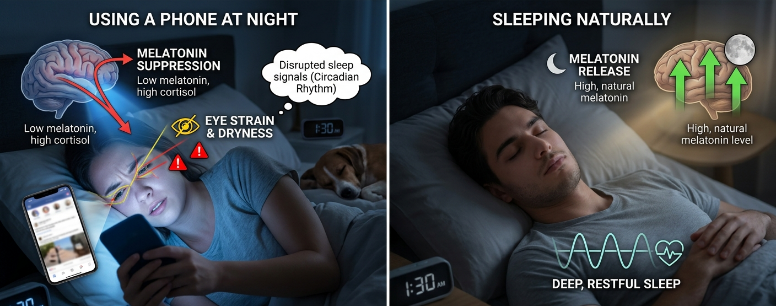
One of the biggest reasons screen time affects sleep is blue light. Digital screens emit blue light, a type of light that tricks your brain into thinking it is still daytime. This interferes with the production of melatonin, the hormone responsible for making you feel sleepy. When melatonin levels are low, your body struggles to transition into sleep mode. As a result you take longer to fall asleep, your sleep quality decreases and your sleep cycle becomes irregular. This is why experts often warn against using screens before bedtime.
2. Delayed Sleep Onset
Have you ever said, “Just five more minutes” while scrolling, only to realize an hour has passed? This is called delayed sleep onset. Screens keep your brain engaged and alert, making it harder to wind down. Activities like watching videos, playing games, scrolling social media and reading news stimulate your brain instead of relaxing it. This delays your ability to fall asleep naturally.
3. Increased Mental Stimulation
Your brain needs time to relax before sleep. However, screens provide constant stimulation. Notifications, messages, and endless content keep your brain active. Even emotionally engaging content can trigger stress or excitement, both of which interfere with sleep.
For example:
- Watching intense shows can increase adrenaline
- Reading negative news can cause anxiety
- Social media comparisons can lead to stress
All of this keeps your mind awake when it should be slowing down.
4. Disruption of Circadian Rhythm
Your circadian rhythm relies on natural light signals to function properly. Exposure to bright screens at night confuses your internal clock. Your brain starts to believe it is still daytime, delaying your sleep schedule. Over time, this can lead to irregular sleep patterns, insomnia and difficulty waking up in the morning. This is especially common in people who use screens late at night regularly.
5. Reduced Sleep Quality
Even if you manage to fall asleep after using screens, the quality of your sleep may still be affected. Research shows that screen exposure before bed can reduce deep sleep, interrupt REM sleep and cause frequent awakenings. This means you may wake up feeling tired, even after a full night in bed.
The Link between Screen Time and Insomnia
Excessive screen time is closely linked to insomnia. Insomnia is a condition where you have trouble falling asleep or staying asleep. Screen use before bedtime increases the risk of developing this problem. Common symptoms include:
- Difficulty falling asleep
- Waking up during the night
- Feeling tired during the day
- Poor concentration
Reducing screen time is often one of the first recommendations for improving insomnia.
How Screen Time Affects Different Age Groups
Exploring how children, teenagers, adults, and older individuals experience sleep disruption differently due to screen exposure. Understand age-specific risks, behavioral patterns, and practical solutions to improve sleep across every stage of life.
Children and Teenagers
Young people are especially vulnerable to screen-related sleep issues.
- Late-night gaming or social media use delays sleep
- Blue light affects developing brains more strongly
- Poor sleep impacts academic performance and mood
Adults
Adults often use screens for work and relaxation, which increases exposure.
- Late-night emails and work tasks extend screen time
- Streaming services encourage binge-watching
- Sleep deprivation affects productivity and mental health
Older Adults
Even older adults are not immune.
- Screen use can worsen existing sleep issues
- Reduced melatonin production makes the effects stronger
Signs That Screen Time Is Affecting Your Sleep
You may not always realize that screens are the cause of your sleep problems. Here are some warning signs:
- You cannot fall asleep without using your phone
- You feel restless at night
- You wake up tired even after enough hours in bed
- You check your phone during the night
- You rely on caffeine to stay awake during the day
If these sound familiar, your screen habits may be interfering with your sleep cycle.
Benefits of Reducing Screen Time before Bed
Cutting down on screen use can have immediate and long-term benefits:
- Without the distraction of screens and the effects of blue light, your brain starts producing melatonin more efficiently. This helps you fall asleep quicker instead of lying awake scrolling or overthinking.
- Reducing screen exposure allows you to experience deeper and more restorative sleep stages, including REM sleep. This means you wake up feeling more refreshed rather than groggy.
- Quality sleep plays a major role in emotional balance. When you sleep better, you are less likely to feel irritable, anxious, or stressed during the day.
- A well-rested body has more energy to handle daily tasks. You will notice less reliance on caffeine and fewer midday energy crashes.
- Good sleep improves memory, concentration, and decision-making. This can lead to better performance at work, school, or in daily responsibilities.
Many people notice improvements within just a few days of changing their habits.
Practical Tips to Reduce Screen Time at Night
Simple, effective strategies to limit digital exposure, build a healthy nighttime routine, and improve your sleep cycle naturally are:
1. Follow the 60-Minute Rule
Avoid screens at least 60 minutes before bedtime. This gives your brain enough time to shift from an active, alert state into a more relaxed mode. During this time, your body naturally starts increasing melatonin levels, helping you fall asleep more easily and naturally.
2. Use Night Mode or Blue Light Filters
Most smartphones, laptops, and tablets come with built-in night mode or blue light filter settings. Turning these on in the evening can reduce eye strain and limit some of the negative effects of blue light. While this is helpful, it is best used alongside reduced screen time rather than as a complete solution.
3. Create a Screen-Free Bedroom
Try to keep your bedroom a device-free zone. Avoid bringing phones, laptops, or tablets into bed. This helps your brain associate your sleeping space with rest instead of entertainment or work, making it easier to fall asleep and stay asleep throughout the night.
4. Replace Screen Time with Relaxing Activities
Instead of scrolling through your phone, switch to calming activities that prepare your mind for sleep. You can read a physical book, listen to soft music, practice meditation or deep breathing, or write in a journal. These habits reduce stress and signal your brain that it is time to wind down.
5. Set a Digital Curfew
Pick a specific time each night to stop using all digital devices, such as 9 PM or 10 PM depending on your schedule. Sticking to this routine consistently trains your body to expect sleep at a certain time, improving your overall sleep cycle over time.
6. Reduce Notifications
Constant notifications can keep your brain alert and interrupt your relaxation time. Turn off non-essential alerts in the evening or switch your phone to silent or do not disturb mode. This minimizes distractions and helps you disconnect mentally before bed.
7. Stick to a Sleep Schedule
Going to bed and waking up at the same time every day helps regulate your internal body clock. Even on weekends, try to maintain a consistent schedule. This strengthens your circadian rhythm and makes it easier to fall asleep without relying on screens or other distractions.
How screen time affects sleep patterns across different age groups.
| Age Group | Average Daily Screen Time | Percentage Experiencing Sleep Disruption | Average Sleep Duration | Common Sleep Issues |
| Children (6-12) | 4-6 hours | 60% | 9-10 hours | Delayed sleep onset, difficulty staying asleep |
| Teenagers (13-18) | 6-9 hours | 75% | 7-8 hours | Insomnia, late-night scrolling, irregular sleep patterns |
| Adults (19-64) | 7-10 hours | 68% | 6-7 hours | Poor sleep quality, early waking, difficulty concentrating |
| Older Adults (65+) | 3-5 hours | 55% | 6-7 hours | Fragmented sleep, lighter sleep stages, early morning waking |
Insights from the Table:
- Teenagers are the most affected group, with 75% experiencing sleep disruption due to high screen exposure.
- Children need the longest sleep, yet excessive screen time often reduces sleep duration and quality.
- Adults and older adults face poorer sleep quality, often linked to late-night work emails, social media, or entertainment.
- Reducing screen time by even one hour before bed can improve sleep duration and quality across all age groups.
The Role of Technology in Sleep Improvement
While screens are often blamed for poor sleep, technology can also play a positive role when used wisely and in moderation. The key is not to eliminate technology completely, but to use it in a way that supports your natural sleep cycle rather than disrupts it. Some tools that support better sleep include sleep tracking apps, white noise apps and guided meditation apps. The key is to use them earlier in the evening and avoid prolonged exposure close to bedtime.
Common Myths about Screen Time and Sleep
Debunking popular misconceptions about digital device use at night and revealing the real impact of screens on your sleep cycle and overall health.
- Myth 1: Watching TV Helps You Fall Asleep: While it may feel relaxing, TV still emits blue light and stimulates your brain.
- Myth 2: Night Mode Completely Fixes the Problem: Blue light filters help, but they do not eliminate the issue entirely.
- Myth 3: Only Phones Affect Sleep: All screens, including laptops and TVs, can disrupt your sleep cycle.
Final Thoughts
Screen time is a major part of modern life, but it comes with hidden costs, especially for your sleep. From suppressing melatonin to disrupting your circadian rhythm, excessive screen use can have serious effects on your ability to rest properly.
The good news is that small changes can make a big difference. By reducing screen time before bed, creating healthier habits, and understanding how digital devices affect your body, you can take control of your sleep cycle. If you want better sleep, more energy, and improved overall health, start by putting your phone down a little earlier tonight.
FAQs:
1. Does screen time really affect sleep quality?
Yes, screen time can significantly affect sleep quality. The blue light from devices reduces melatonin production, making it harder to fall asleep and stay asleep. This often leads to lighter, less restful sleep.
2. How long before bed should I stop using screens?
It is recommended to stop using screens at least 30 to 60 minutes before bedtime. This allows your brain to relax and your body to naturally prepare for sleep.
3. Can night mode or blue light filters prevent sleep problems?
Blue light filters and night mode can help reduce the impact, but they do not completely eliminate sleep disruption. Limiting screen time is still the most effective solution.
4. Is watching TV better than using a phone before sleep?
Not really. While TVs are usually viewed from a distance, they still emit blue light and can stimulate your brain. Both can interfere with your sleep cycle if used before bed.
5. What can I do instead of using my phone at night?
You can try relaxing activities like reading a book, meditation, light stretching, or listening to calming music. These habits support better sleep and help improve your overall sleep routine.
