
If you spend most of your day sitting, whether at a desk, in a car, or on the couch, your body is quietly paying the price. Tight hips, stiff shoulders, lower back pain, and poor posture are all common side effects of a sedentary lifestyle. The good news is that a simple daily stretching routine can reverse much of this damage and help you feel stronger, more flexible, and more energized. In this detailed guide, you will learn a complete daily stretching routine for people who sit all day, along with expert tips, benefits, and the best ways to make stretching a habit that actually sticks.
Why Sitting All Day Is Harmful
Before jumping into the routine, it helps to understand what happens to your body when you sit for long hours. When you sit for extended periods:
- Your hip flexors shorten and tighten
- Your glutes become weak and inactive
- Your hamstrings stiffen
- Your shoulders round forward
- Your spine loses its natural alignment
This combination leads to poor posture, reduced mobility, and increased risk of chronic pain. Over time, it can even affect your energy levels and mental focus. That is why a daily stretching routine is not optional anymore. It is essential.
Benefits of a Daily Stretching Routine
Adding just 10 to 20 minutes of stretching into your daily schedule can transform your health. Here are the key benefits:
- Stretching lengthens tight muscles and improves joint movement, making everyday activities easier.
- A targeted stretching routine relieves tension in the spine and surrounding muscles.
- Stretching counteracts the forward hunch caused by sitting.
- Movement increases blood flow, delivering oxygen and nutrients to your muscles.
- You feel more awake and alert after stretching.
- Flexible muscles are less prone to strains and tears.
Best Time to Do Stretching
You can stretch at any time of the day, but these are the most effective options:
- Morning: Wake up your body and reduce stiffness
- Midday: Break up long sitting sessions
- Evening: Release tension after work
For best results, combine short breaks during the day with a full routine once daily.
Daily Stretching Routine for Desk Workers
This routine is designed specifically for people who sit all day. It targets the most affected muscle groups.
1. Neck Stretch (2 minutes)
This simple stretch helps release tension built up from looking at screens for long hours.
How to do it: Sit or stand upright. Gently tilt your head toward your shoulder. Hold for 15 to 20 seconds. Switch sides.
Benefits: Relieves neck stiffness and tension headaches.

2. Shoulder Rolls and Chest Opener (2 minutes)
This movement opens up the upper body and reverses the effects of slouching.
How to do it: Roll your shoulders backward in a circular motion. Interlace your fingers behind your back. Lift your arms slightly to open your chest.
Benefits: Improves posture and reduces rounded shoulders.

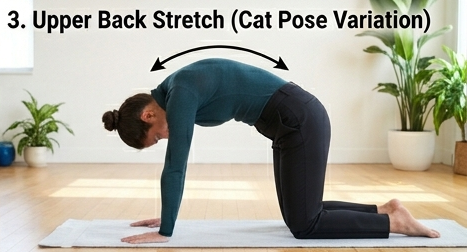
3. Upper Back Stretch (Cat Pose Variation) (2 minutes)
A great stretch to loosen tight muscles in the upper back caused by poor sitting posture.
How to do it: Sit or stand and extend your arms forward. Round your upper back. Pull your shoulder blades apart.
Benefits: Targets upper back tension caused by slouching.
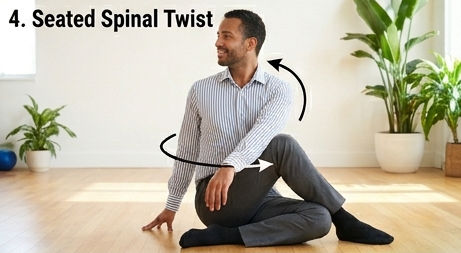
4. Seated Spinal Twist (2 minutes)
This gentle twist helps improve flexibility and keeps your spine mobile throughout the day.
How to do it: Sit upright in a chair. Place one hand on the opposite knee. Twist your torso gently.
Benefits: Improves spinal mobility and reduces stiffness.
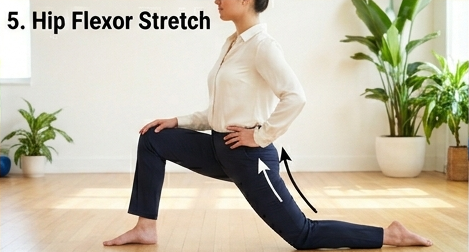
5. Hip Flexor Stretch (3 minutes)
Essential for counteracting tight hips that develop from prolonged sitting.
How to do it: Step one foot forward into a lunge position. Lower your hips gently. Keep your back straight.
Benefits: Opens tight hips, one of the biggest problems from sitting all day.
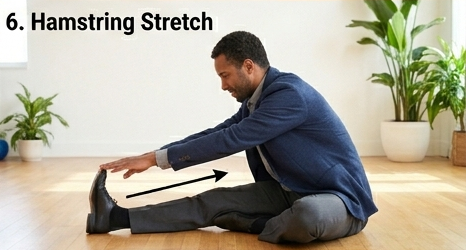
6. Hamstring Stretch (3 minutes)
This stretch helps release tension in the back of your legs and supports better posture.
How to do it: Sit on the edge of a chair. Extend one leg forward. Reach toward your toes.
Benefits: Relieves tight hamstrings and supports lower back health.
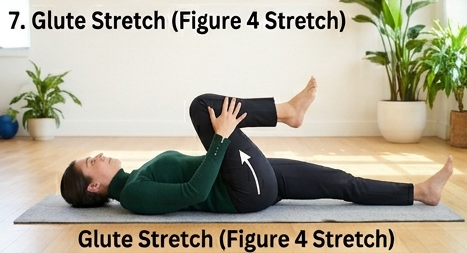
7. Glute Stretch (Figure 4 Stretch) (3 minutes)
A highly effective stretch to activate and loosen tight glute muscles.
How to do it: Sit in a chair. Place one ankle over the opposite knee. Lean forward slightly.
Benefits: Activates and stretches glutes, reducing lower back strain.
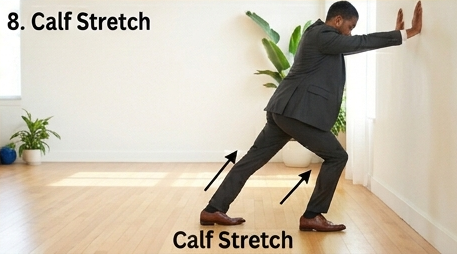
8. Calf Stretch (2 minutes)
This stretch improves lower leg flexibility and reduces stiffness from inactivity.
How to do it: Stand facing a wall. Step one foot back. Press your heel into the ground.
Benefits: Improves circulation and reduces leg stiffness.
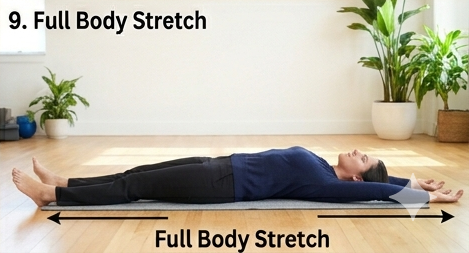
9. Full Body Stretch (2 minutes)
A refreshing stretch that engages your entire body and resets your posture.
How to do it: Stand tall. Reach your arms overhead. Stretch your entire body upward.
Benefits: Resets posture and energizes your body.
Sitting vs Stretching: Key Statistics and Health Impact
| Factor | Prolonged Sitting (8+ hours/day) | Daily Stretching Routine |
| Muscle Flexibility | Decreases over time due to tight muscles | Improves flexibility and range of motion |
| Posture | Leads to rounded shoulders and poor spinal alignment | Helps correct posture and spinal balance |
| Lower Back Pain | Up to 80% of adults experience it due to sitting | Regular stretching reduces pain significantly |
| Energy Levels | Often causes fatigue and sluggishness | Boosts energy and alertness |
| Blood Circulation | Slows down, especially in legs | Improves circulation and oxygen flow |
| Risk of Injury | Higher due to stiff muscles | Lower due to improved mobility |
| Productivity | Decreases due to discomfort and fatigue | Increases with better focus and comfort |
| Mental Focus | Can decline after long sitting periods | Improves with movement and breaks |
| Hip Mobility | Severely restricted over time | Restores and maintains hip flexibility |
| Overall Health Risk | Linked to obesity, heart issues, and poor metabolism | Supports active lifestyle and better health |
Quick 5 Minute Stretching Routine (For Busy Days)
If you are short on time, this quick stretching routine is perfect for keeping your body active without disrupting your schedule. It is designed specifically for busy people, desk workers, and anyone who sits for long hours but still wants to reduce stiffness and improve mobility.
What to include in your quick routine:
- Neck Stretch: Loosens tension in the neck and reduces stiffness from screen time. This is especially helpful if you spend hours looking at your phone or computer.
- Shoulder Rolls: Releases tightness in the shoulders and helps correct rounded posture. It also improves upper body circulation and reduces stress.
- Hip Flexor Stretch: Targets one of the most affected areas from prolonged sitting. This stretch helps open up your hips and reduces pressure on your lower back.
- Hamstring Stretch: Relieves tightness in the back of your legs and supports better posture. Tight hamstrings are a common cause of lower back discomfort.
- Full Body Stretch: A simple but effective way to wake up your entire body, improve alignment, and boost energy levels instantly.
Important Tips for Effective Stretching
To get the most out of your daily stretching routine, follow these tips:
- Do Not Rush: Hold each stretch for at least 15 to 30 seconds.
- Breathe Normally: Avoid holding your breath. Deep breathing helps muscles relax.
- Avoid Pain: Stretching should feel good, not painful.
- Stay Consistent: Daily practice is more important than intensity.
- Combine with Movement: Pair stretching with walking or light exercise for better results.
How to Build a Habit of Stretching Daily
Knowing the routine is one thing, sticking to it is another. Here is how to make it part of your life:
Set Reminders
Use your phone, smartwatch, or computer to remind you to stretch every 1 to 2 hours. These small prompts help break long sitting sessions and keep your body active throughout the day. You can also use simple alarm labels like “stand and stretch” to stay focused. Over time, your body will start expecting these breaks naturally.
Pair It with Existing Habits
One of the easiest ways to stay consistent is to attach stretching to something you already do daily. For example, stretch right after brushing your teeth, after lunch, or during tea or coffee breaks. This method, often called habit stacking, makes it easier to remember and removes the need for extra motivation.
Keep It Simple
Do not overwhelm yourself with a long or complicated routine in the beginning. Start with just 3 to 5 basic stretches that target your tight areas like your neck, shoulders, and hips. Once it becomes a habit, you can slowly expand your routine. The goal is consistency, not perfection.
Track Your Progress
Pay attention to how your body feels after a few days or weeks. You may notice reduced stiffness, better posture, or less pain in your back and neck. You can even keep a simple note on your phone to track improvements. Seeing progress, even small changes, can be very motivating and help you stay committed.
Make It Enjoyable
If stretching feels like a chore, you are less likely to stick with it. Play your favorite music, stretch near a window, or do it with a friend or coworker. Creating a positive environment can make the routine something you actually look forward to.
Common Mistakes to Avoid
Some common mistakes are given as below:
- Skipping warm up completely
- Stretching too aggressively
- Being inconsistent
- Ignoring pain signals
- Sitting for hours without breaks
Avoiding these mistakes will speed up your progress.
Final Thoughts
If you sit all day, your body needs movement to stay healthy. A daily stretching routine is one of the simplest and most effective ways to improve flexibility, reduce pain, and boost your overall well-being. You do not need expensive equipment or a gym membership. Just a few minutes of focused stretching each day can reverse the negative effects of sitting and help you feel more active and comfortable. Start small, stay consistent, and your body will thank you.
FAQs:
1. How often should I do a daily stretching routine?
You should stretch at least once a day, especially if you sit for long hours. For best results, add short stretching breaks every 1 to 2 hours during your workday.
2. Can stretching really fix bad posture from sitting?
Yes, consistent stretching can significantly improve posture. It helps loosen tight muscles like hip flexors and chest muscles while allowing your body to return to proper alignment over time.
3. How long should each stretching session be?
A full session can take 10 to 20 minutes, but even a quick 5 minute stretching routine can help reduce stiffness and improve mobility if you are busy.
4. Is it better to stretch in the morning or at night?
Both are beneficial. Morning stretching helps wake up your body, while evening stretching relieves tension built up from sitting all day. The best time is whenever you can stay consistent.
5. Can stretching reduce lower back pain from sitting?
Yes, stretching is one of the most effective ways to relieve lower back pain caused by prolonged sitting. Focus on stretches for the hips, hamstrings, and lower back for the best results.
