
In today’s world, sitting for long hours has become the norm. Whether you are working at a desk, attending online classes, commuting, or relaxing with your phone, chances are you are spending more time sitting than moving. While it may seem harmless, sitting for 8 hours a day can quietly damage your health in ways most people do not realize. This long form guide will break down the real health risks of prolonged sitting, why it happens, and most importantly, how to fix it with practical, easy to follow strategies.
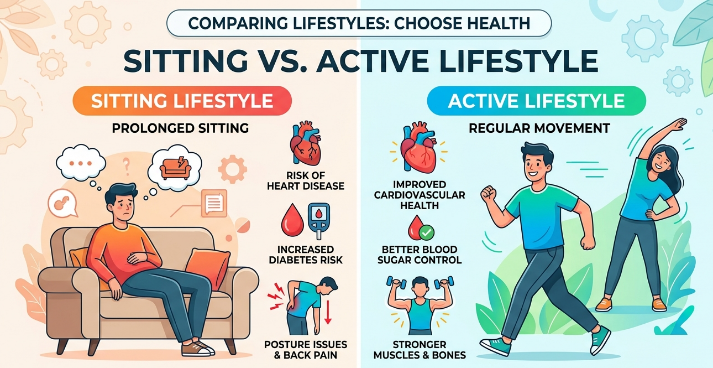
Why Sitting for Long Hours Is Dangerous
The human body is designed to move. When you sit for extended periods, your body shifts into a low energy state. Muscles burn less fat, blood flow slows down, and metabolic processes become less efficient. Even if you exercise regularly, sitting for long stretches can still negatively impact your health. This is why many experts now call prolonged sitting the “new smoking”.
Key Reasons Sitting Is Harmful
- Reduced calorie burn
- Poor blood circulation
- Muscle inactivity
- Increased insulin resistance
- Postural stress on spine and neck
Top Health Risks of Sitting 8 Hours a Day
Let’s explore the most important health risks associated with prolonged sitting. These are backed by research.
1. Increased Risk of Heart Disease
One of the biggest dangers of sitting too long is its impact on heart health. Sitting reduces blood circulation, which can lead to fat buildup in blood vessels.
What Happens: Slower blood flow, higher cholesterol levels and increased blood pressure.
Result: Higher risk of heart attacks and cardiovascular disease.
2. Weight Gain and Obesity
When you sit for hours, your body burns fewer calories. This creates an imbalance between calories consumed and calories burned.
Why It Happens: Reduced metabolism, increased snacking while sitting and less physical activity.
Result: Over time, these changes can significantly raise your risk of developing serious conditions like heart attacks, stroke, and other forms of cardiovascular disease. Even people who exercise regularly are not fully protected if they spend most of their day sitting without breaks.
3. Poor Posture and Back Pain
Sitting for long hours often leads to slouching, especially when using laptops or phones. This puts pressure on your spine and weakens core muscles.
Common Issues: Lower back pain, neck stiffness and rounded shoulders.
Long Term Effects: If not corrected, poor posture can lead to chronic back pain, misalignment of the spine, and long term musculoskeletal problems that may require physical therapy or medical treatment.
4. Increased Risk of Type 2 Diabetes
Prolonged sitting has a direct effect on how your body regulates blood sugar. When you are inactive for long periods, your muscles are not using glucose efficiently, which can lead to insulin resistance over time.
What Happens: Blood sugar levels rise and insulin becomes less effective
Result: This increases the risk of developing Type 2 diabetes, especially when combined with other factors like poor diet or excess weight. Breaking up sitting time with light activity can help regulate blood sugar levels more effectively.
5. Mental Health Issues
Sitting too much is not just harmful to your physical health, it can also affect your mental well-being. A sedentary lifestyle has been strongly linked to increased levels of stress, anxiety, and depression.
Common Effects: Anxiety, depression and low energy levels
Why: Physical movement helps release endorphins, which are natural mood boosting chemicals in the body. When you sit for long periods, this process slows down, leading to lower mood and reduced mental clarity.
6. Poor Circulation and Leg Problems
Sitting for extended periods can cause blood to pool in your lower body, particularly in the legs. This happens because there is less muscle movement to help push blood back toward the heart.
Risks Include: Varicose veins, deep vein thrombosis (DVT) and leg numbness
7. Weak Muscles and Joint Stiffness
When you sit all day, many of your muscles remain inactive. Over time, this lack of use causes them to weaken and lose flexibility, which affects your overall strength and mobility.
Affected Areas: Core muscles, glutes and hip flexors
Result: Weak muscles and stiff joints can make everyday activities more difficult. You may also become more prone to injuries, especially when you suddenly engage in physical activity after long periods of sitting.
8. Reduced Life Expectancy
One of the most serious concerns linked to prolonged sitting is its association with a shorter lifespan. Research suggests that people who sit for long hours daily have a higher risk of early death compared to those who stay more active.
Why: This is largely due to the combined effect of multiple health risks, including heart disease, diabetes, poor circulation, and reduced physical fitness.
Signs You Are Sitting Too Much
You may not realize it, but your body gives clear signals when you are too sedentary.
Watch Out For:
- Constant back or neck pain
- Feeling tired despite resting
- Weight gain without clear reason
- Stiffness when standing up
- Poor posture
If you experience these regularly, it is time to make changes.
How to Fix the Effects of Sitting All Day
The good news is that you can reverse many of the negative effects of sitting with simple lifestyle adjustments. You do not need a complete life overhaul, just small consistent changes.
1. Follow the 30-30 Rule
One of the simplest and most effective habits you can build is the 30-30 rule. Every 30 minutes, stand up and move your body for at least 30 seconds. This helps reset your posture, improve blood flow, and keep your muscles engaged.
Simple Activities:
- Walk around your room or office
- Stretch your arms, legs, and back
- Do a few squats or calf raises
2. Use a Standing Desk
Standing desks are becoming increasingly popular because they allow you to alternate between sitting and standing. You do not have to stand all day. The goal is to create a balance between both positions.
Benefits:
- Improves posture by encouraging a more natural spine position
- Burns more calories compared to sitting
- Reduces pressure on your lower back
3. Improve Your Workspace Ergonomics
Your desk setup plays a huge role in preventing pain and long term health issues. Poor ergonomics can lead to strain on your neck, back, and wrists.
Tips:
- Keep your screen at eye level to avoid neck strain
- Use a chair with proper lumbar (lower back) support
- Keep your feet flat on the floor or on a footrest
- Avoid leaning forward or slouching while working
4. Add Movement to Your Routine
You do not need a full workout session to stay active. Adding small movements throughout your day can help break long sitting periods and keep your body energized.
Ideas:
- Take phone calls while walking
- Use stairs instead of elevators whenever possible
- Walk around during short breaks or between tasks
5. Stretch Regularly
Stretching is essential for reducing stiffness caused by prolonged sitting. It helps improve flexibility, reduce muscle tension, and maintain a healthy range of motion.
Focus On:
- Neck stretches to relieve tension
- Hamstrings to reduce tightness in the legs
- Hip flexors which often become shortened from sitting
- Shoulders to correct roundedposture
6. Exercise Consistently
While movement during the day is important, regular exercise is still essential for overall health. It strengthens your muscles, improves heart health, and boosts metabolism.
Recommended: 30 minutes of moderate activity daily and strength training 2 to 3 times a week
7. Stay Hydrated
Drinking enough water is often overlooked, but it plays a key role in keeping your body active and functioning properly.
Benefits:
- Supports metabolism and energy levels
- Prevents fatigue and headaches
- Encourages more movement through regular breaks
Bonus: More trips to refill your bottle means more movement.
8. Set Reminders
It is easy to lose track of time when you are focused on work. Setting reminders can help you stay consistent with movement breaks.
Use: Phone alarms, fitness trackers and productivity apps
9. Walk after Meals
A short walk after meals is a simple but powerful habit. It helps your body digest food more efficiently and keeps your blood sugar levels stable.
Even 10 Minutes Helps: Better metabolism, improved energy and lower blood sugar spikes
10. Build Active Habits
The goal is not just to sit less, but to live more actively.
Examples: Park farther away, do household chores regularly and stand while watching TV
Sitting vs Health Impact
To better understand the real impact of prolonged sitting, here is an informative table with research based insights and widely reported health statistics. This data helps highlight why reducing sedentary time is so important.
| Health Factor | Impact of Sitting 8+ Hours Daily | Key Insight / Statistic |
| Heart Disease Risk | Increased cardiovascular strain | Up to 147% higher risk of heart events |
| Life Expectancy | Shortened lifespan | Sitting 8+ hours linked to 15 to 20% higher mortality risk |
| Calorie Burn | Significantly reduced | Burns up to 30% fewer calories than light activity |
| Type 2 Diabetes Risk | Higher insulin resistance | 90% increased risk in highly sedentary individuals |
| Posture and Back Pain | Increased spinal pressure | 80% of desk workers report back pain issues |
| Mental Health | Higher anxiety and depression levels | Sedentary people show 25% higher depression risk |
| Blood Circulation | Slower circulation, especially in legs | Increased risk of blood clots and swelling |
| Muscle Strength | Weakening of core and lower body muscles | Muscle activity drops drastically during sitting |
| Weight Gain / Obesity | Increased fat storage | Linked to higher body fat percentage over time |
| Productivity and Energy | Reduced focus and energy levels | Regular movement improves productivity by up to 20% |
Best Daily Routine to Avoid Sitting Too Much
Here is a simple example of a healthier routine:
- Morning: Stretch for 5 to 10 minutes
- Work hours: Stand or move every 30 minutes
- Lunch: Take a short walk
- Afternoon: Light stretching
- Evening: 30 minutes of exercise
- Night: Avoid long sitting sessions
Final Thoughts
Sitting for 8 hours a day might seem unavoidable, especially with modern work and lifestyle demands. However, the health risks of prolonged sitting are real and serious. From heart disease and diabetes to mental health issues and chronic pain, the effects can build up over time.
The good news is that small, consistent changes can make a huge difference. You do not need to quit your job or completely change your routine. Just move more, sit less, and stay aware of your habits. Start today. Your future body will thank you.
FAQs:
1. Is sitting for 8 hours a day really harmful?
Yes, sitting for 8 hours a day can be harmful, especially if you do not take breaks. It increases the risk of heart disease, weight gain, poor posture, and other health issues. Even regular exercise may not fully offset long periods of sitting.
2. How often should I take breaks from sitting?
It is recommended to stand up or move every 30 minutes. Even a short 30 to 60 second break can improve blood circulation and reduce the negative effects of prolonged sitting.
3. Can exercise cancel out the effects of sitting all day?
Exercise helps a lot, but it does not completely cancel out the effects of sitting for long hours. The best approach is to combine regular exercise with frequent movement throughout the day.
4. What are the best exercises for people with desk jobs?
Simple activities like walking, stretching, bodyweight exercises (like squats or lunges), and light cardio are great for desk workers. Strength training and daily movement also help maintain overall fitness.
5. How can I stay active if I have a busy work schedule?
You can stay active by making small changes like taking walking breaks, using stairs, stretching at your desk, standing during calls, and setting reminders to move. Even short bursts of activity throughout the day can make a big difference.
