
If you spend most of your day sitting at a desk, skipping meals, grabbing quick snacks, or relying on tea and coffee to get through the day, you are not alone. Millions of office workers struggle with maintaining a healthy lifestyle while juggling deadlines, meetings, and long work hours. The good news is that you do not need a complicated or expensive routine to stay healthy. A simple diet plan for office workers can help you stay energized, improve focus, and even support weight loss. This detailed guide will walk you through everything you need to know, from meal timing and food choices to practical tips that actually work in a busy office environment.

Why Office Workers Need a Structured Diet Plan
Office jobs often lead to long hours of sitting, irregular eating habits, high consumption of junk food, low physical activity and increased stress levels. These factors can lead to weight gain, fatigue, digestive issues, and even long term health problems.
A well balanced diet plan for office workers helps to maintain energy levels throughout the day, improve concentration and productivity, prevent unnecessary weight gain, reduce cravings for unhealthy snacks and support overall health and immunity.
Key Principles of a Simple Diet Plan
Before jumping into the actual meal plan, it is important to understand a few core principles.
1. Eat Balanced Meals
Each meal should include protein (eggs, chicken, lentils, and yogurt), healthy fats (nuts, seeds, and olive oil), complex carbs (whole grains, oats, and brown rice) and fiber (vegetables, fruits).
2. Avoid Long Gaps between Meals
Skipping meals slows metabolism and leads to overeating later. Try to eat every 3 to 4 hours.
3. Stay Hydrated
Dehydration often feels like hunger. Aim for 8 to 10 glasses of water daily.
4. Control Portion Size
Even healthy food can cause weight gain if eaten in excess.
5. Limit Processed Foods
Avoid packaged snacks, sugary drinks, and fast food as much as possible.
Simple Daily Diet Plan for Office Workers
Here is a practical and easy to follow daily diet plan that fits into a typical office schedule.
Morning Routine (7:00 AM – 8:00 AM)
Start your day right. Include options like
- Warm water with lemon
- Soaked almonds (5 to 8 pieces)
- 1 fruit like banana or apple
Why it matters: This jumpstarts your metabolism and prepares your body for the day.
Breakfast (8:30 AM – 9:30 AM)
Never skip breakfast. It fuels your brain and body. Healthy breakfast ideas are:
- Oatmeal with milk and nuts
- Boiled eggs with whole wheat toast
- Yogurt with granola and fruit
- Vegetable omelette
- Peanut butter sandwich
Mid-Morning Snack (11:00 AM)
Avoid the temptation of office biscuits and sugary tea snacks. Healthy snack options are:
- Fresh fruit
- Handful of nuts
- Coconut water
- Greek yogurt
Benefits: Keeps your energy stable and prevents overeating at lunch.
Lunch (1:00 PM – 2:00 PM)
Your lunch should be filling but not too heavy.
Ideal office lunch meal: Grilled chicken or lentils. Brown rice or whole wheat roti. Cooked vegetables. Salad (cucumber, carrot, lettuce)
Vegetarian option: Chickpea curry with roti. Vegetable pulao with yogurt
Evening Snack (4:30 PM – 5:30 PM)
This is when most people crave junk food.
Healthy alternatives: Roasted chickpeas. Green tea with nuts. Fruit smoothie (no added sugar). Boiled corn
Avoid: Fried snacks, Sugary biscuits, Soft drinks
Dinner (7:30 PM – 9:00 PM)
Keep dinner light and easy to digest.
Dinner options: Grilled fish or chicken with vegetables. Lentil soup with salad. Stir fried vegetables with tofu. Light khichdi.
Tip: Eat at least 2 hours before sleeping.
Best Foods for Office Workers
Here are some of the best foods to include in your diet regularly:
- Protein Rich Foods: Eggs, Chicken breast, Fish, Lentils and Beans
- High Fiber Foods: Oats, brown rice, whole wheat bread and vegetables
- Healthy Snacks: Almonds, walnuts, seeds and fruits
- Hydration Options: Water, herbal tea or coconut water
Foods to Avoid in Office Life
To maintain a healthy diet, try to limit fast food like burgers and fries, sugary drinks and sodas, packaged snacks, excess caffeine and bakery items. These foods cause energy crashes and weight gain.
Meal Prep Tips for Busy Office Workers
One of the biggest challenges is lack of time. Here are simple meal prep strategies:
Plan Your Meals Weekly: Decide what you will eat in advance to avoid unhealthy choices.
Cook in Bulk: Prepare meals for 2 to 3 days at once.
Carry Your Own Lunch: Homemade food is healthier and more affordable.
Keep Healthy Snacks at Work: Stock your drawer with nuts, seeds, and healthy bars.
Weight Loss Diet Tips for Office Workers
If your goal is weight loss, follow these additional tips:
- Reduce portion sizes slightly
- Avoid eating late at night
- Walk for 10 to 15 minutes after meals
- Replace sugary drinks with water
- Track your calorie intake
Common Mistakes Office Workers Make
Avoid these common mistakes:
Skipping Breakfast: Leads to overeating later in the day.
Overeating at Lunch: Heavy meals cause sleepiness and low productivity.
Drinking Too Much Coffee: Excess caffeine can disrupt sleep and increase anxiety.
Eating at Your Desk: Mindless eating leads to overconsumption.
Simple Lifestyle Changes to Support Your Diet
Diet alone is not enough. Combine it with small lifestyle changes:
- Take short walking breaks every hour
- Use stairs instead of elevators
- Stretch during work hours
- Get at least 7 hours of sleep
- Manage stress through relaxation techniques
Sample Weekly Diet Plan
Here is a quick weekly variation to keep things interesting:
Monday
Breakfast: Oats
Lunch: Chicken with rice
Dinner: Soup and salad
Tuesday
Breakfast: Eggs and toast
Lunch: Lentils and roti
Dinner: Grilled vegetables
Wednesday
Breakfast: Yogurt and fruit
Lunch: Fish and rice
Dinner: Light khichdi
Mix and match foods to avoid boredom.
Workers Diet and Health Statistics Table
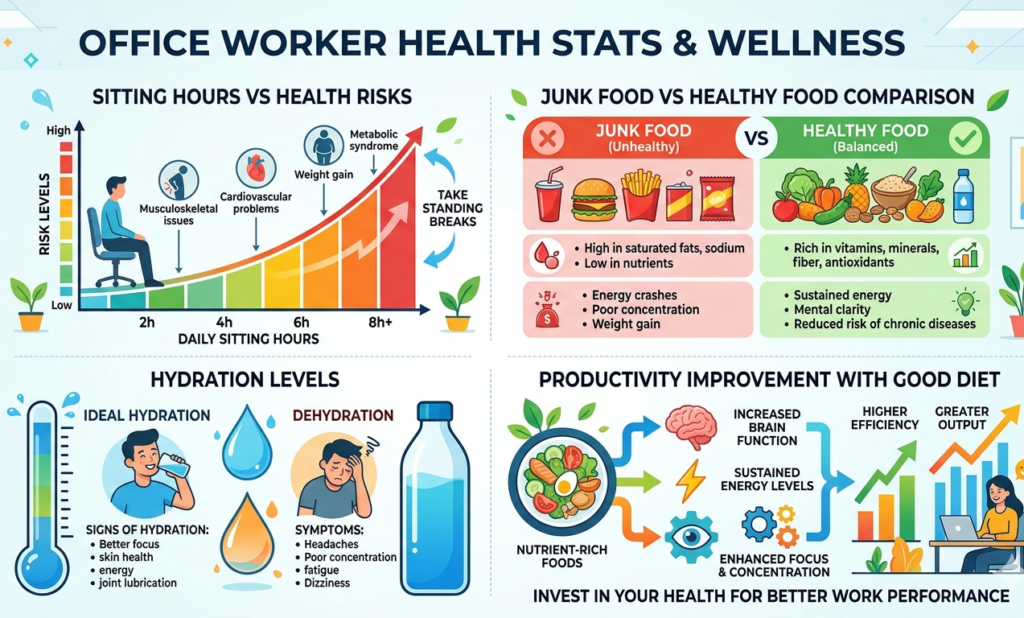
To better understand why following a simple diet plan for office workers is important, here is an informative table with key health and nutrition statistics related to desk jobs and eating habits:
| Category | Statistic | What It Means for Office Workers |
| Sedentary Lifestyle | Average office worker sits 6 to 10 hours daily | Long sitting hours slow metabolism and increase fat storage |
| Weight Gain Risk | Desk workers are up to 40% more likely to gain weight | Lack of movement and poor diet contribute to weight gain |
| Meal Skipping | Around 30% of office workers skip breakfast | Skipping meals leads to low energy and overeating later |
| Junk Food Consumption | Over 50% rely on processed snacks during work | High sugar and fat intake causes energy crashes |
| Hydration Levels | Nearly 75% of people are mildly dehydrated | Low water intake reduces focus and productivity |
| Productivity Impact | Healthy eating can improve productivity by up to 20% | Better diet leads to better concentration and performance |
| Energy Levels | Balanced meals reduce fatigue by up to 30% | Proper nutrition keeps energy stable throughout the day |
| Obesity Risk | Sedentary jobs increase obesity risk by 25% | Poor diet plus inactivity leads to long term health issues |
| Sugar Intake | Office workers consume 2 to 3 times more added sugar daily | Excess sugar leads to weight gain and energy crashes |
| Physical Activity | Less than 25% meet daily activity recommendations | Lack of movement affects overall health and fitness |
Final Thoughts
Following a simple diet plan for office workers does not mean starving yourself or giving up your favorite foods completely. It is about making smarter choices, staying consistent, and building healthy habits over time.
Start small. Replace one unhealthy snack with a healthy one. Drink more water. Eat breakfast regularly. These small steps can lead to big changes. With the right approach, you can stay fit, active, and productive even with a busy office lifestyle.
FAQs:
1. What is the best diet for office workers?
The best diet for office workers is a balanced diet that includes protein, fiber, healthy fats, and complex carbohydrates. Focus on home cooked meals, regular meal timing, and healthy snacks to maintain energy and productivity.
2. How can office workers lose weight easily?
Office workers can lose weight by controlling portion sizes, avoiding junk food, staying active during the day, and following a structured meal plan. Drinking more water and reducing sugar intake also helps with fat loss.
3. What are healthy snacks for office workers?
Healthy snack options include fruits, nuts, yogurt, roasted chickpeas, and smoothies without added sugar. These snacks help control hunger and prevent unhealthy cravings.
4. Is it okay to skip meals during office hours?
No, skipping meals can slow down metabolism and lead to overeating later. It is better to eat small, balanced meals every 3 to 4 hours to keep energy levels stable.
5. How much water should an office worker drink daily?
An office worker should aim to drink around 8 to 10 glasses of water daily. Proper hydration improves focus, reduces fatigue, and supports overall health.
