
Parents often ask an important nutrition question: can children after 2 and less than 10 eat seeds? The short answer is yes, children between the ages of 2 and 10 can safely eat many types of seeds when served properly and in age-appropriate portions. In fact, seeds can be a healthy addition to a child’s diet because they contain protein, healthy fats, fiber, vitamins, minerals, and antioxidants.
However, not all seeds should be given in the same way. Some whole seeds may become a choking hazard for younger children, while others may trigger allergies or digestive discomfort if introduced too quickly. This detailed guide explains everything parents need to know about seeds for kids, including benefits, best seeds for children, safety precautions, serving ideas, nutrition facts, and expert feeding tips.
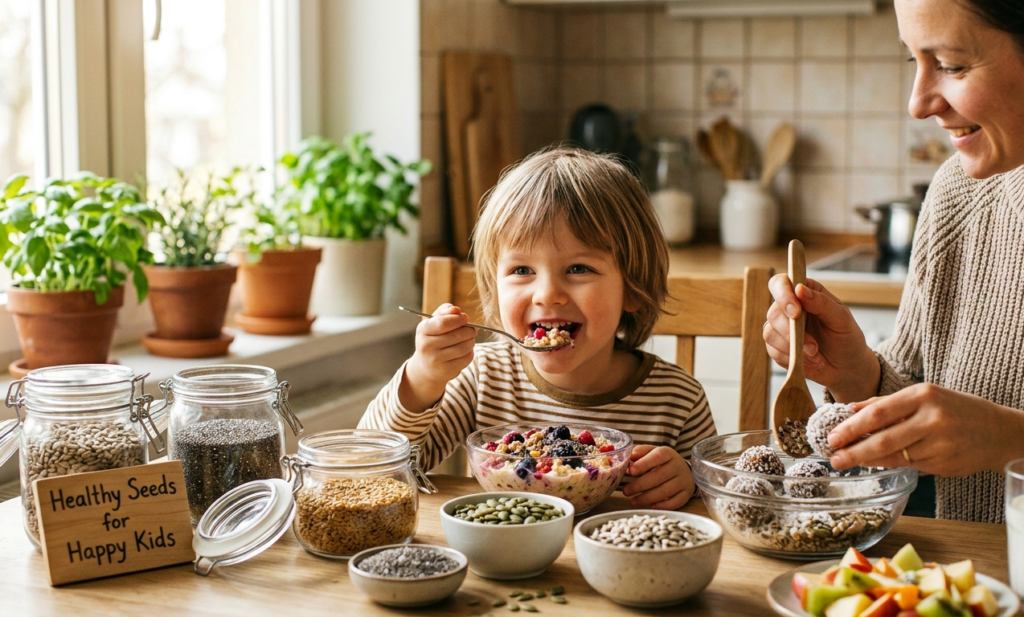
Are Seeds Safe for Children Between 2 and 10?
Yes, most edible seeds are safe for children aged 2 to 10 when:
- They are served in an age-appropriate form
- Portion sizes are controlled
- The child has no seed allergies
- Parents supervise younger children while eating
Seeds are packed with nutrients that support growth, brain development, immunity, digestion, and energy levels. Pediatric nutrition experts often recommend including healthy seeds in balanced meals for children. Popular healthy seeds for kids include:
- Chia seeds
- Flax seeds
- Pumpkin seeds
- Sunflower seeds
- Sesame seeds
- Hemp seeds
These are commonly called “super seeds” because of their rich nutrient content.
Nutritional Benefits of Seeds for Children
Seeds are small but highly nutritious. They contain essential nutrients that growing children need daily.
Main Health Benefits of Seeds for Kids
| Nutrient | Benefit for Children |
| Protein | Supports muscle growth and tissue repair |
| Healthy fats | Helps brain development and concentration |
| Fiber | Improves digestion and prevents constipation |
| Iron | Supports healthy blood and energy levels |
| Calcium | Strengthens bones and teeth |
| Magnesium | Helps muscle and nerve function |
| Zinc | Supports immunity and growth |
| Omega 3 fatty acids | Important for brain and eye development |
Because many children are picky eaters, adding nutrient-dense seeds to meals can help improve overall nutrition naturally.
Best Seeds for Children Aged 2 to 10
Best seeds for children aged 2 and 10 are given as below:
1. Chia Seeds for Kids
Chia seeds are one of the safest and healthiest seeds for children when soaked properly.
Benefits of Chia Seeds
- Rich in omega 3 fatty acids
- High in fiber
- Supports digestion
- Helps hydration
- Contains calcium and protein
How to Serve Chia Seeds: Mix into yogurt. Add to smoothies. Make chia pudding. Stir into oatmeal. Add to pancakes
Important Tip: Always soak chia seeds before giving large amounts to young children because dry chia seeds expand after absorbing liquid.
Recommended Quantity: Ages 2 to 5: 1 teaspoon dailyandAges 6 to 10: 1 to 2 teaspoons daily
2. Flax Seeds for Kids
Flax seeds are excellent for digestion and brain health.
Benefits of Flax Seeds
- Rich in omega 3
- Helps constipation
- Supports heart health
- Contains antioxidants
Best Way to Serve: Ground flax seeds are better than whole flax seeds because children digest them more easily.
Serving Ideas: Mix into milk. Add to cereal. Blend into smoothies. Add to baked foods
Recommended Quantity: 1 teaspoon ground flaxseed per day for younger children and up to 2 teaspoons for older children
3. Pumpkin Seeds for Kids
Pumpkin seeds are rich in iron, magnesium, zinc, and protein.
Benefits of Pumpkin Seeds
- Supports immunity
- Helps growth
- Good for energy
- Supports sleep because of magnesium
How to Serve Pumpkin Seeds: For younger kids, use crushed pumpkin seeds, finely chopped seeds and pumpkin seed butter. Older children can usually handle shelled pumpkin seeds safely.
Healthy Snack Ideas: Add to trail mix. Sprinkle over salads. Mix into granola. Add to muffins
4. Sunflower Seeds for Children
Sunflower seeds are nutrient-rich and affordable.
Benefits
- High in vitamin E
- Good for skin and immunity
- Provides healthy fats
- Supports brain health
Safety Tip: Always choose shelled sunflower seeds for younger children to reduce choking risk.
Serving Ideas: Add to sandwiches. Mix into oatmeal. Use sunflower seed butter. Sprinkle on rice dishes
5. Sesame Seeds for Kids
Sesame seeds are widely used in many foods and contain calcium and iron.
Benefits
- Supports bone strength
- Good source of minerals
- Helps healthy growth
Common Foods with Sesame Seeds
- Tahini
- Sesame crackers
- Bread toppings
- Sesame bars
Allergy Warning: Sesame allergy is becoming more common in children. Introduce sesame carefully and monitor for reactions.
6. Hemp Seeds for Children
Hemp seeds are soft and easy to eat.
Benefits
- Complete protein source
- Rich in healthy fats
- Good for muscle growth
Easy Serving Methods: Sprinkle on yogurt. Blend into smoothies. Add to cereal. Mix into pasta sauces. Because hemp seeds are naturally soft, they are often easier for younger children to eat safely.
Can Seeds Be a Choking Hazard for Children?
Yes, some seeds can become a choking hazard, especially for children under 5 years old if served whole and hard.
Higher Risk Seeds: Whole pumpkin seeds, whole sunflower seeds and large roasted seeds
Safer Options: Ground seeds, Seed butters, Crushed seeds and soaked seeds. Parents should avoid giving large handfuls of hard seeds to toddlers.
How to Introduce Seeds to Children Safely
Introducing seeds slowly helps reduce digestive discomfort and allows parents to monitor allergies.
Step-by-Step Seed Introduction
Steps are given as below:
- Step 1: Start Small: Begin with half a teaspoon mixed into familiar foods.
- Step 2: Watch for Allergies: Monitor for rash, swelling, vomiting, trouble breathing and itching. Seek medical attention immediately if severe allergic symptoms appear.
- Step 3: Increase Slowly: Gradually increase serving size over several days.
- Step 4: Offer Water: Fiber-rich seeds absorb water, so hydration is important.
Best Age to Start Seeds for Children
Best age to start seeds for children are given as below:
- Ages 2 to 3: Best forms Ground flaxseed, Chia pudding, Seed butter and finely crushed seeds
- Ages 4 to 5: Children may begin handling soft seeds and Small quantities of shelled seeds
- Ages 6 to 10: Most children can safely eat mixed seeds, trail mixes and whole shelled seeds. Adult supervision is still recommended.
Seeds and Constipation in Kids
Seeds usually help prevent constipation because they contain fiber. However, eating too many seeds without enough water may lead to bloating, gas, stomach discomfort and constipation. Moderation is important.
Roasted Seeds and Healthy for Children
Yes, roasted seeds can be healthy if they are lightly roasted, unsalted and free from artificial flavors. Avoid heavily salted or spicy packaged seeds because excess sodium is unhealthy for children.
Kids Eating Seed Butters
Seed butters are one of the safest ways for younger children to consume seeds. Popular seed butters include sunflower seed butter, tahini and pumpkin seed butter.
Benefits of Seed Butters: Lower choking risk, easy to spread, nutrient dense and great alternative for nut allergies.You can spread seed butter on Bread, Apples, Bananas and Crackers
Seeds vs Nuts for Children
Seeds can be a good alternative for children with nut allergies. For example sunflower seed butter is often used instead of peanut butter in schools and pumpkin seeds provide protein similar to nuts. However, seeds themselves can still cause allergies in some children.
Daily Seed Intake for Children
Parents often want to understand “how many seeds can kids eat daily.” Here is a general guideline:
| Age Group | Recommended Daily Amount |
| 2 to 3 years | 1 teaspoon |
| 4 to 5 years | 1 to 2 teaspoons |
| 6 to 10 years | 1 to 2 tablespoons |
These amounts vary depending on the child’s overall diet and activity level.
Best Ways to Add Seeds to Kids’ Meals
Here are practical and kid-friendly ideas.
- Breakfast Ideas: Oatmeal with chia seeds. Yogurt with hemp seeds. Pancakes with flaxseed. Smoothies with pumpkin seeds
- Lunch Ideas: Sunflower seed butter sandwiches. Rice bowls with sesame seeds. Pasta with hemp seeds
- Snack Ideas: Homemade seed bars. Trail mix. Seed crackers. Chia pudding
- Dinner Ideas: Soup topped with pumpkin seeds. Seed sprinkles on vegetables. Ground seeds mixed into sauces
Common Parent Concerns about Seeds
- Can Seeds Upset a Child’s Stomach: Too many seeds at once may cause bloating or gas. Start slowly.
- Can Seeds Help Underweight Kids: Yes, seeds are calorie-dense and contain healthy fats that may support healthy weight gain.
- Are Seeds Good for Brain Development: Yes, omega 3 rich seeds like chia and flax support brain health?
- Can Seeds Improve Immunity: Seeds contain zinc, vitamin E, and antioxidants that support the immune system.
Seeds Children Should Avoid
Some seeds are not appropriate for children. Avoid raw or bitter apricot kernels, unidentified wild seeds, very hard flavored seed snacks and seeds with excessive salt. Always choose food-grade edible seeds from trusted brands.
Expert Tips for Parents
Some expert tips for parents are given as below
- Choose Unsalted Seeds: Children do not need excess sodium.
- Prefer Fresh Seeds: Old seeds may become rancid because of natural oils.
- Store Properly: Keep seeds in airtight containers.
- Rotate Different Seeds: Different seeds provide different nutrients.
- Use Ground Seeds for Younger Kids: This improves safety and digestion.
Final Verdict: Can Children After 2 and Less Than 10 Eat Seeds?
Yes, children between 2 and 10 years old can eat seeds safely when served correctly. Seeds provide excellent nutrition for growing children and may support brain development, digestion, immunity, and overall health.
The best seeds for kids include Chia seeds, Flax seeds, Pumpkin seeds, Sunflower seeds, Sesame seeds and Hemp seeds. Parents should start with small portions, choose age-appropriate forms, avoid choking hazards, watch for allergies and offer plenty of water. When included as part of a balanced diet, seeds can become a healthy everyday food for children.
FAQs:
- Can a 2-year-old eat chia seeds?
Yes, soaked chia seeds are generally safe in small amounts.
- Can children eat sunflower seeds daily?
Yes, shelled sunflower seeds in moderation can be healthy for children.
- Are pumpkin seeds good for kids?
Yes, pumpkin seeds are rich in iron, zinc, and magnesium.
- Can seeds replace nuts for allergic children?
Sometimes yes, especially sunflower seed butter, but check with a pediatrician.
- What is the safest seed for toddlers?
Ground flaxseed, soaked chia seeds, and seed butters are among the safest options.
