
Modern office life can feel like a nonstop race. Emails pile up, meetings overlap, and deadlines loom, and before you know it, and your mind is exhausted even if your body has barely moved. If you have ever felt mentally drained after a full day at your desk, you are not alone. This is exactly why meditation is becoming one of the most powerful tools for office workers around the world.
This beginner friendly guide will walk you through everything you need to know about meditation for office workers, from what it is to how you can start practicing it even during a busy workday. By the end, you will have practical techniques, tips, and strategies that you can apply immediately.
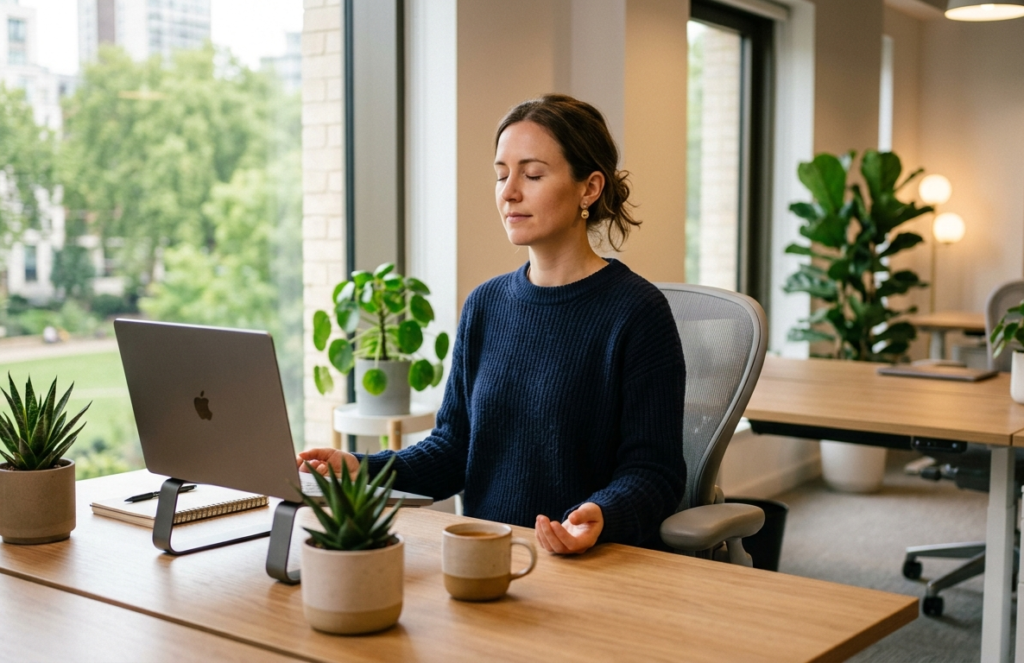
What is Meditation and Why Office Workers Need It
Meditation is simply the practice of training your mind to focus and redirect your thoughts. It is not about emptying your mind completely. Instead, it is about becoming aware of your thoughts without getting overwhelmed by them.
For office workers, meditation is especially helpful because it reduces stress from heavy workloads, improves concentration and productivity, helps manage anxiety and burnout, enhances decision making skills and promotes emotional balance during workplace conflicts.
Common Challenges Office Workers Face
Before jumping into meditation techniques, it is important to understand the problems you are trying to solve.
- Constant Distractions: Notifications, emails, and chats break your focus every few minutes.
- Mental Fatigue: Even if you sit all day, your brain is working nonstop, leading to exhaustion.
- Work Stress and Pressure: Deadlines and performance expectations can create constant tension.
- Lack of Work-Life Balance: Work thoughts often follow you home, making it hard to relax.
Meditation directly addresses these issues by helping you regain control over your attention and emotions.
Benefits of Meditation for Office Workers
If you are wondering whether meditation is worth your time, here are some proven benefits:
- Improved Focus and Productivity: Meditation trains your brain to stay present. This means fewer distractions and better output.
- Reduced Stress and Anxiety: Regular meditation lowers stress hormones, helping you stay calm even during busy days.
- Better Communication: You become more mindful of your reactions, which improves workplace relationships.
- Enhanced Creativity: A relaxed mind is more open to new ideas and problem solving.
- Physical Health Benefits: Meditation can reduce headaches, improve sleep, and even lower blood pressure.
How to Start Meditation as a Beginner
Starting meditation does not require special equipment or a lot of time. You can begin with just a few minutes a day.
Step 1: Choose a Quiet Spot
Find a place where you can sit comfortably without interruptions. This could be your desk, a meeting room, or even your car.
Step 2: Sit Comfortably
You do not need a special pose. Sit straight but relaxed, with your feet flat on the ground.
Step 3: Focus on Your Breath
Close your eyes and pay attention to your breathing. Notice the air going in and out.
Step 4: Let Thoughts Come and Go
Your mind will wander, and that is completely normal. Just gently bring your focus back to your breath.
Step 5: Start Small
Begin with 2 to 5 minutes and gradually increase to 10 or 15 minutes.
Simple Meditation Techniques for Office Workers
Here are some easy meditation techniques you can practice during your workday.
1. Breathing Meditation at Your Desk
This is one of the easiest ways to start.
- Sit comfortably
- Close your eyes or soften your gaze
- Take slow, deep breaths
- Count each breath from 1 to 10, then repeat
2. One Minute Reset Meditation
Perfect for busy schedules.
- Pause what you are doing
- Take a deep breath
- Focus only on your breathing for one minute
- Let go of any tension
This technique is highly effective for quick stress relief.
3. Body Scan Meditation
This helps release physical tension.
- Sit or stand comfortably
- Focus on different parts of your body
- Start from your head and move down to your feet
- Notice any tightness and relax those areas
4. Walking Meditation
If you have a break, try this:
- Walk slowly and mindfully
- Pay attention to each step
- Notice how your feet touch the ground
- Stay present in the moment
5. Guided Meditation
Guided meditation is perfect for beginners because it gives you clear instructions to follow. You simply listen to a voice that guides your breathing, focus, or relaxation, which makes it easier to stay on track. It is especially useful for office workers since you can play short sessions during breaks without overthinking the process. Apps like Headspace, Calm, and Insight Timer offer quick 5 to 10 minute sessions for stress relief and focus.
Best Time to Meditate During Work Hours
Many people think meditation requires long sessions, but even short breaks can be powerful.
- Morning before Work: Helps set a calm tone for the day.
- Midday Break: Reduces stress and refreshes your mind.
- Before Important Meetings: Improves clarity and confidence.
- End of Workday: Helps you disconnect from work and relax.
Creating a Meditation Routine
Consistency is key. Here is how to build a simple routine. Start with 5 minutes daily. Choose a fixed time, like after lunch. Use reminders or calendar alerts. Track your progress. Over time, meditation will become a natural part of your day.
Tips to Stay Consistent
Many beginners struggle to stick with meditation. Here are some tips:
- Keep It Simple: Do not overcomplicate your practice.
- Be Patient: Results take time, so do not expect instant changes.
- Use Technology: Apps and timers can help you stay on track.
- Create a Calm Environment: Even a small, quiet corner can make a difference.
- Do Not Judge Yourself: There is no perfect way to meditate.
Common Myths about Meditation
Let us clear up some misconceptions:
Myth 1: You Need to Empty Your Mind
Not true. Meditation is about awareness, not emptiness.
Myth 2: It Takes Too Much Time
Even 2 minutes can be effective.
Myth 3: It is Only for Spiritual People
Meditation is a practical tool for anyone, especially office workers.
Myth 4: You Must Sit Cross Legged
You can meditate in any comfortable position.
Meditation and Workplace Productivity
Companies are now encouraging meditation because it improves employee performance. Meditation helps you to stay focused on tasks, make better decisions, reduce errors and handle pressure effectively.
Combining Meditation with Healthy Work Habits
Meditation works best when combined with other healthy practices:
- Take Regular Breaks: Short breaks improve focus and reduce fatigue.
- Stay Hydrated: Drink enough water throughout the day.
- Maintain Good Posture: This helps prevent physical discomfort.
- Limit Multitasking: Focus on one task at a time for better results.
Signs That Meditation is working
You may not notice changes immediately, but over time you will start to experience real, noticeable improvements in both your mental and physical well-being. Your focus becomes sharper, making it easier to stay on task without getting distracted by emails or notifications. Stress levels begin to drop, so situations that once felt overwhelming become more manageable.
You may also notice better emotional control, meaning you react more calmly during pressure or workplace conflicts instead of feeling triggered. Patience naturally increases, helping you deal with difficult tasks or people more effectively. On top of that, many office workers report having more steady energy throughout the day, rather than feeling drained or burned out by the afternoon.
Meditation and Workplace Productivity
Some key statistics elements of meditation and workplace are given below in a table:
| Category | Statistic | What It Means for Office Workers |
| Stress Reduction | 60 percent of people report reduced stress after regular meditation | Helps manage daily work pressure and deadlines |
| Productivity | Meditation can improve focus by up to 14 percent | Better concentration leads to higher work output |
| Anxiety Levels | Mindfulness practices reduce anxiety by around 30 percent | Less workplace anxiety and improved mental clarity |
| Employee Burnout | Regular meditation reduces burnout symptoms significantly | Helps prevent exhaustion and mental fatigue |
| Attention Span | Meditation training improves attention span in just 2 weeks | Useful for handling multitasking and long work hours |
| Sleep Quality | 70 percent of users report better sleep with meditation | Better rest leads to improved performance at work |
| Emotional Control | Mindfulness improves emotional regulation by up to 25 percent | Better handling of workplace conflicts and stress |
| Decision Making | Meditation enhances decision making speed and accuracy | Helps in high pressure business situations |
| Absenteeism | Companies report lower absenteeism with wellness programs | Healthier employees take fewer sick days |
| Overall Wellbeing | 80 percent of regular meditators report improved wellbeing | Leads to a more balanced and positive work life |
Final Thoughts
Meditation is not just a trend. It is a powerful and practical tool that can transform your work life. As an office worker, you deal with constant mental demands, and meditation gives your mind the break it needs. You do not need hours of free time or special training. Just a few minutes a day can make a huge difference. Start small, stay consistent, and gradually build your practice.
FAQs:
1. How long should I meditate as a beginner office worker?
Start with just 2 to 5 minutes a day. As you get more comfortable, you can increase your meditation time to 10 or 15 minutes. Consistency matters more than duration.
2. Can I meditate at my desk without closing my eyes?
Yes, you can. Simply focus on your breathing or a fixed point on your screen or desk. Meditation is about awareness, not necessarily closing your eyes.
3. What is the best time to meditate during office hours?
The best time depends on your schedule, but popular options include before starting work, during lunch breaks, or right before important meetings to improve focus and reduce stress.
4. Do I need any apps or tools for meditation?
No, you do not need anything to get started. However, guided meditation apps can be helpful for beginners who need structure and support.
5. How quickly will I see results from meditation?
Some people feel calmer after the first session, but noticeable long term benefits like reduced stress and improved focus usually appear after a few weeks of regular practice.
