
Constipation during pregnancy is one of the most common digestive problems that expecting mothers experience. While pregnancy is an exciting journey, it also brings many physical and hormonal changes that can affect the digestive system. Many pregnant women notice that bowel movements become less frequent, stools become harder, and passing stool becomes difficult or painful.
Although constipation during pregnancy can be uncomfortable, it is usually temporary and can often be managed with simple lifestyle changes, healthy eating habits, proper hydration, and safe medical guidance. Understanding why constipation happens during pregnancy and knowing the safest ways to relieve it can make your pregnancy much more comfortable. This complete guide covers everything you need to know about constipation during pregnancy, including its causes, symptoms, risk factors, treatment options, home remedies and prevention tips.
What Is Constipation During Pregnancy?
Constipation during pregnancy refers to infrequent bowel movements or difficulty passing stool while expecting a baby. Most healthcare professionals consider constipation when you have fewer than three bowel movements per week, hard or dry stools, excessive straining during bowel movements, or a feeling that the bowel has not completely emptied. Some women experience constipation during the first trimester, while others develop it during the second or third trimester. For many, it may continue until after childbirth.
Common Is Constipation During Pregnancy
Constipation is extremely common during pregnancy. Studies estimate that between 20% and 40% of pregnant women experience constipation at some point during pregnancy. The condition can occur at any stage but becomes more common as pregnancy progresses because the growing uterus places additional pressure on the intestines.
Pregnancy Cause Constipation
Several changes in the body contribute to constipation during pregnancy.
1. Pregnancy Hormones Slow Digestion
One of the biggest reasons is the increased production of progesterone. Progesterone relaxes smooth muscles throughout the body, including the muscles of the digestive tract. This slows the movement of food through the intestines, allowing more water to be absorbed from the stool, making it harder and more difficult to pass.
2. Iron Supplements
Many pregnant women are prescribed prenatal vitamins containing iron. While iron is essential for preventing anemia and supporting fetal development, it is well known for causing constipation, especially in higher doses.
3. Growing Baby
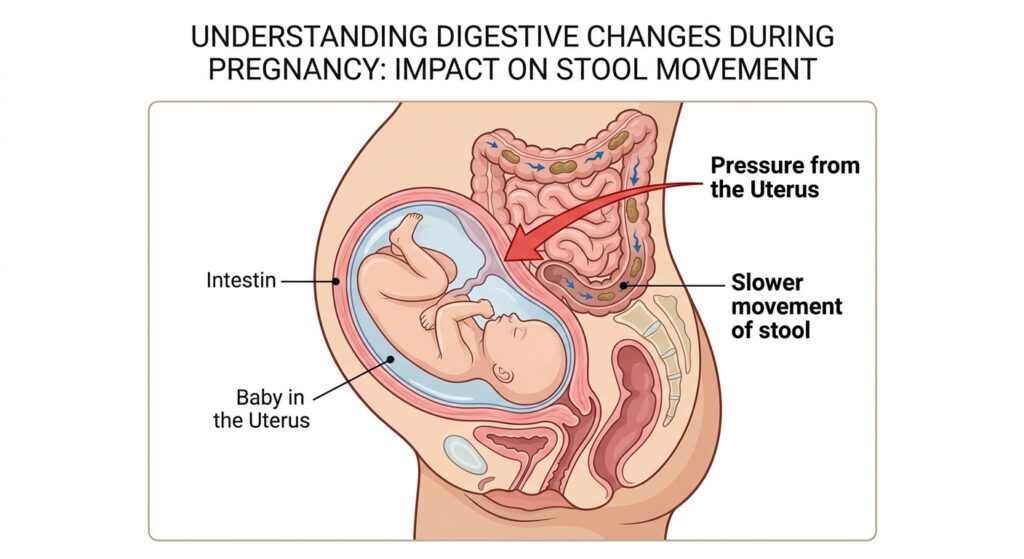
As the baby grows, the uterus expands and places pressure on the intestines and rectum. This slows bowel movement and makes passing stool more difficult.
4. Reduced Physical Activity
Some pregnant women become less physically active due to fatigue, nausea, pelvic pain, or bed rest. Reduced movement slows intestinal function.
5. Dehydration
Morning sickness, vomiting, or not drinking enough fluids can lead to dehydration, making stools dry and difficult to pass.
6. Dietary Changes
A low fiber diet, increased intake of processed foods, or insufficient fruits and vegetables can increase the risk of constipation.
Symptoms of Constipation during Pregnancy
Constipation symptoms may include:
- Fewer than three bowel movements per week
- Hard, dry stools
- Pain during bowel movements
- Straining while passing stool
- Feeling that the bowel is not completely empty
- Abdominal discomfort
- Bloating
- Gas
- Lower abdominal pain
- Rectal discomfort
Some women may also develop hemorrhoids due to repeated straining.
Risk Factors for Pregnancy Constipation
You may have a higher chance of developing constipation during pregnancy if you:
- Eat a low fiber diet
- Drink insufficient water
- Take iron supplements
- Have a history of constipation
- Exercise very little
- Experience severe morning sickness
- Have irritable bowel syndrome
- Carry multiple babies
- Are on bed rest
Dangerous Constipation During Pregnancy
In most cases, constipation itself is not dangerous for either the mother or baby. However, untreated constipation can lead to:
- Hemorrhoids
- Anal fissures
- Severe discomfort
- Fecal impaction
- Increased abdominal pain
It is important to manage constipation early to avoid these complications.
Safe Ways to Relieve Constipation During Pregnancy
Many effective and pregnancy-safe treatments can improve bowel movements.
Increase Fiber Intake:
Increase Fiber Intake in your body and diet. Fiber adds bulk to stool and helps it move more easily through the intestines. Good fiber-rich foods include:
| Food | Fiber Benefits |
| Apples | Natural soluble fiber |
| Pears | High fiber content |
| Berries | Rich in antioxidants and fiber |
| Oatmeal | Excellent soluble fiber |
| Whole wheat bread | Supports healthy digestion |
| Brown rice | Improves bowel regularity |
| Lentils | High fiber and protein |
| Chickpeas | Excellent digestive support |
| Kidney beans | Rich in dietary fiber |
| Broccoli | High fiber vegetable |
| Carrots | Gentle on digestion |
| Sweet potatoes | Good source of fiber |
Aim for approximately 25 to 30 grams of fiber daily unless advised otherwise by your healthcare provider.
Drink Plenty of Water
Hydration softens stool and helps fiber work effectively. Pregnant women generally benefit from drinking plenty of water throughout the day unless they have been advised to limit fluids for medical reasons. Water is the best choice, but other healthy options include:
- Milk
- Coconut water
- Fresh fruit infused water
- Clear soups
- Herbal teas approved by your healthcare provider
Stay Physically Active
Regular physical activity stimulates bowel movements. Safe pregnancy exercises may include:
- Walking
- Prenatal yoga
- Swimming
- Stretching
- Light pregnancy exercises
Always consult your healthcare provider before beginning any exercise routine.
Eat Smaller Meals
Instead of eating three very large meals, try eating smaller meals more frequently. This supports digestion and reduces digestive discomfort.
Establish a Bathroom Routine
Try to use the bathroom at the same time each day. Never ignore the urge to have a bowel movement because delaying can worsen constipation.
Best Foods for Constipation During Pregnancy
Including these foods regularly may naturally improve digestion:
- Prunes
- Prune juice
- Kiwi
- Oranges
- Figs
- Raisins
- Spinach
- Avocados
- Chia seeds
- Flaxseeds
- Oats
- Yogurt with probiotics
- Whole grain cereals
- Beans
- Peas
These foods combine fiber, fluids, and beneficial nutrients that support healthy bowel function.
Foods to Limit
Certain foods may contribute to constipation if eaten in excess. These include:
- White bread
- White rice
- Fast food
- Fried foods
- Highly processed snacks
- Excessive cheese
- Sugary desserts
- Large amounts of red meat
You do not necessarily need to avoid these foods completely, but balancing them with fiber-rich options is helpful.
Laxatives Safe During Pregnancy
Some laxatives are considered safe during pregnancy, but they should only be used after discussing them with your healthcare provider. Safe options may include:
- Bulk-forming fiber supplements
- Stool softeners when recommended
- Osmotic laxatives in certain situations
Avoid taking stimulant laxatives regularly unless specifically prescribed, as they may not be appropriate for routine use during pregnancy. Always consult your healthcare provider before taking any medication, including over-the-counter constipation remedies.
Prenatal Vitamins Cause Constipation
Yes. Many prenatal vitamins contain iron, which can contribute to constipation. If constipation becomes severe, your healthcare provider may recommend:
- A different prenatal vitamin
- A lower iron formulation if appropriate
- Additional dietary fiber
- A pregnancy-safe stool softener
Never stop taking prenatal vitamins without medical advice.
Natural Home Remedies for Pregnancy Constipation
Many women find relief using natural methods. Some effective home remedies include:
- Drinking warm water in the morning
- Eating prunes daily
- Drinking prune juice
- Adding chia seeds to yogurt
- Eating oatmeal for breakfast
- Including fresh fruits at every meal
- Walking after meals
- Drinking enough water throughout the day
- Consuming probiotic yogurt
- Including leafy green vegetables in daily meals
These natural remedies often improve bowel regularity without medication.
Constipation Affect the Baby
Constipation usually does not affect the baby directly. The discomfort mainly affects the mother. However, severe constipation can increase stress, discomfort, and the risk of hemorrhoids, making pregnancy less comfortable. Proper treatment helps improve maternal well-being.
Contact Your Doctor
Seek medical advice if constipation is accompanied by:
- Severe abdominal pain
- Heavy rectal bleeding
- Blood mixed within stool
- Vomiting
- Fever
- Persistent constipation lasting several days despite home treatment
- Severe bloating
- Sudden constipation with intense pain
These symptoms may indicate another medical condition requiring prompt evaluation.
Tips to Prevent Constipation During Pregnancy
Preventing constipation is often easier than treating it. Follow these simple habits:
- Eat high fiber foods every day.
- Drink enough water throughout the day.
- Exercise regularly if approved by your doctor.
- Include fruits and vegetables with every meal.
- Choose whole grains instead of refined grains.
- Take prenatal vitamins exactly as prescribed.
- Avoid delaying bowel movements.
- Limit highly processed foods.
- Include probiotic foods in your diet.
- Maintain regular meal times.
These healthy habits support both digestive health and overall pregnancy wellness.
Final Thoughts
Constipation during pregnancy is a common and manageable condition that affects many expecting mothers. Hormonal changes, iron supplements, reduced physical activity, dehydration, and the growing uterus all contribute to slower digestion. Fortunately, simple lifestyle changes such as eating more fiber, staying hydrated, exercising regularly, and establishing healthy bathroom habits can provide significant relief.
Most cases improve with dietary changes and safe home remedies, but persistent or severe constipation should always be discussed with your healthcare provider. Taking care of your digestive health throughout pregnancy not only improves comfort but also supports your overall well-being during this important stage of life.
FAQs:
- Is constipation normal during early pregnancy?
Yes. Hormonal changes during the first trimester can slow digestion, causing constipation even before the baby grows significantly.
- Can straining during constipation hurt the baby?
In most healthy pregnancies, gentle straining during bowel movements does not harm the baby. However, excessive straining can worsen hemorrhoids and should be avoided by managing constipation early.
- Is coffee good for constipation during pregnancy?
Small amounts of caffeine may stimulate bowel movements, but pregnant women should follow their healthcare provider’s recommendations regarding caffeine intake. Water and fiber remain the safest long-term solutions.
- Which fruit is best for constipation during pregnancy?
Prunes, pears, kiwi, apples, oranges, berries, and figs are among the best fruits for relieving constipation naturally.
- How much fiber should pregnant women eat?
Most pregnant women benefit from about 25 to 30 grams of dietary fiber daily, along with adequate fluid intake.
- Can probiotics help?
Some studies suggest probiotics may support healthy digestion and improve bowel regularity, although results vary. Discuss probiotic supplements with your healthcare provider before use.
