
Pregnancy is an exciting journey filled with physical and emotional changes. While many women expect symptoms like morning sickness and fatigue, headaches in pregnancy are another common concern that can affect daily life. Some headaches are harmless and caused by normal hormonal changes, while others may indicate a medical condition that requires immediate attention.
Understanding why headaches occur during pregnancy, how to treat them safely, and when to contact your healthcare provider can help you manage symptoms with confidence while protecting both your health and your baby’s well-being. This comprehensive guide explains everything you need to know about headaches during pregnancy, including causes, types, symptoms, treatment options, prevention strategies, and warning signs.
What Are Headaches in Pregnancy?
A headache is pain or discomfort in the head, scalp, face, or neck. During pregnancy, headaches may occur more frequently because of hormonal fluctuations, increased blood volume, stress, dehydration, sleep disturbances, and other pregnancy-related changes.
Many women experience headaches during the first trimester, while others notice improvement in the second trimester. Some women may also develop headaches later in pregnancy due to elevated blood pressure or other medical conditions. Most pregnancy headaches are not dangerous, but severe or sudden headaches should never be ignored.
Are Headaches Common During Pregnancy?
Yes. Headaches are one of the most common pregnancy symptoms. Studies suggest that a significant number of pregnant women experience headaches, especially during the first trimester. Women who already suffer from migraines or tension headaches before pregnancy may continue to experience them, although some notice fewer migraine attacks during pregnancy.
Headaches Happen During Pregnancy
There is no single cause. Pregnancy creates numerous changes in the body that may trigger headaches. Some of the most common causes include:
- Hormonal changes
- Increased blood circulation
- Fatigue
- Emotional stress
- Anxiety
- Poor posture
- Hunger
- Low blood sugar
- Dehydration
- Lack of sleep
- Caffeine withdrawal
- Nasal congestion
- Sinus pressure
These factors may work together, making headaches more frequent.
Common Causes of Headaches during Pregnancy
Common causes of headaches during pregnancy are given as below:
1. Hormonal Changes
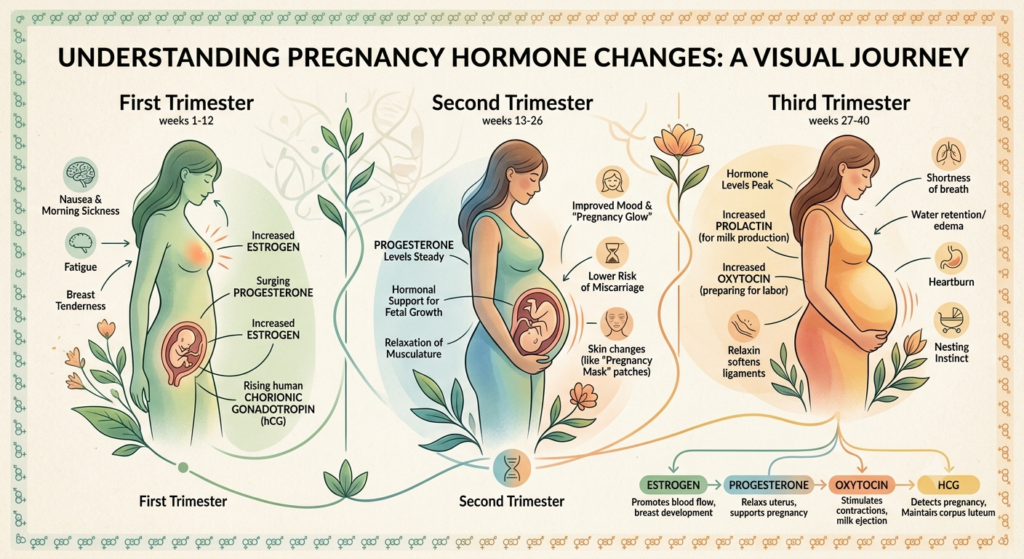
Pregnancy hormones, especially estrogen, change rapidly during early pregnancy. These hormonal shifts affect blood vessels and the nervous system, making headaches more likely.
2. Dehydration
Not drinking enough water is one of the leading causes of headaches during pregnancy. Morning sickness, vomiting, hot weather, and increased fluid requirements can all contribute to dehydration. Signs include:
- Dry mouth
- Dark urine
- Dizziness
- Fatigue
- Headache
3. Low Blood Sugar
Skipping meals or experiencing severe nausea may lower blood sugar levels. This can result in:
- Headaches
- Weakness
- Shakiness
- Sweating
- Irritability
Eating smaller, more frequent meals often helps.
4. Lack of Sleep
Many pregnant women struggle with:
- Frequent urination
- Anxiety
- Heartburn
- Leg cramps
- Difficulty finding a comfortable sleeping position
Poor sleep often contributes to tension headaches.
5. Stress
Emotional stress is another major headache trigger. Planning for childbirth, work responsibilities, family concerns, and hormonal changes can all increase stress levels. Stress commonly causes tension headaches.
6. Caffeine Withdrawal
Women who suddenly stop drinking coffee or tea after becoming pregnant may experience withdrawal headaches. Reducing caffeine gradually rather than stopping suddenly may help minimize symptoms.
7. High Blood Pressure
A headache in late pregnancy may be linked to elevated blood pressure. This can sometimes indicate preeclampsia, a potentially serious pregnancy complication that requires immediate medical evaluation.
Types of Headaches during Pregnancy
Types of Headaches during Pregnancy are given as below:
| Headache Type | Common Features | Serious? |
| Tension headache | Mild to moderate pressure around the head | Usually no |
| Migraine | Throbbing pain, nausea, sensitivity to light | Usually manageable |
| Sinus headache | Facial pain with nasal congestion | Usually no |
| Cluster headache | Severe pain around one eye | Less common |
| Preeclampsia headache | Severe persistent headache with high blood pressure | Medical emergency |
Headaches during Each Trimester
Headaches during each Trimester is given as below:
First Trimester
The first trimester is when headaches are most common. Reasons include:
- Hormonal changes
- Morning sickness
- Fatigue
- Dehydration
- Blood sugar changes
Many women experience improvement after the first trimester.
Second Trimester
Hormones become more stable. Many pregnant women notice:
- Fewer headaches
- Better energy levels
- Reduced nausea
However, dehydration, stress, and poor posture can still trigger headaches.
Third Trimester
Headaches later in pregnancy deserve more attention. Possible causes include:
- High blood pressure
- Sleep problems
- Neck strain
- Increased weight
- Preeclampsia
Never ignore severe headaches after 20 weeks of pregnancy.
Migraine During Pregnancy
Migraines are different from regular headaches. Symptoms may include:
- Throbbing pain
- Pain on one side of the head
- Nausea
- Vomiting
- Sensitivity to light
- Sensitivity to sound
- Visual disturbances
Some women experience fewer migraines during pregnancy, while others continue to have attacks. Always discuss migraine treatment with your healthcare provider before taking medication.
Safe Ways to Relieve Headaches during Pregnancy
Many headaches improve without medication. Here are safe ways to reduce headache pain.
Drink Plenty of Water
Staying hydrated is one of the easiest ways to prevent headaches. Aim for enough fluids throughout the day unless your healthcare provider recommends otherwise.
Eat Regular Meals
Healthy snacks can prevent blood sugar from dropping. Good options include:
- Fruit
- Yogurt
- Nuts
- Whole-grain crackers
- Peanut butter
- Cheese
Get Enough Sleep
Most pregnant women need around 7 to 9 hours of quality sleep every night. Creating a relaxing bedtime routine may improve sleep quality.
Apply a Cold Compress
A cool cloth placed on the forehead or neck can provide temporary headache relief.
Rest in a Quiet Room
Bright lights and loud noises can worsen headaches. Resting in a calm environment often helps.
Practice Relaxation Techniques
Stress management may reduce headache frequency. Helpful activities include:
- Deep breathing
- Meditation
- Gentle stretching
- Prenatal yoga
- Walking
- Listening to calming music
Improve Posture
As pregnancy progresses, maintaining proper posture becomes more important. Supportive chairs and pregnancy pillows may reduce muscle tension.
Taking Medicine for Headaches during Pregnancy
Never start medication without consulting your healthcare provider. Many pain relievers are not recommended during pregnancy. In many cases, healthcare providers consider acetaminophen the preferred option when medication is necessary, but it should still be used only as directed. Avoid taking medications without medical advice, especially during the first trimester.
Home Remedies for Pregnancy Headaches
Natural approaches often provide relief. Popular home remedies include:
- Drinking more water
- Eating balanced meals
- Taking short naps
- Gentle neck massage
- Warm shower
- Prenatal massage from a qualified therapist
- Limiting screen time
- Fresh air
- Regular light exercise
Foods That May Help Prevent Headaches
A healthy pregnancy diet supports overall well-being. Include:
- Leafy green vegetables
- Whole grains
- Lean proteins
- Eggs
- Bananas
- Avocados
- Beans
- Nuts
- Seeds
- Fresh fruits
- Dairy products
These foods provide important nutrients that support healthy blood sugar levels and hydration.
Foods That May Trigger Headaches
Some women notice headaches after eating certain foods. Possible triggers include:
- Chocolate
- Processed meats
- Artificial sweeteners
- Excess caffeine
- Aged cheese
- Highly processed foods
Keeping a food diary may help identify personal triggers.
See a Doctor
Although many headaches are harmless, some require prompt medical evaluation. Contact your healthcare provider if you experience:
- A sudden severe headache
- Persistent headache that does not improve
- Headache with blurred vision
- Headache with swelling of the hands or face
- Headache with high blood pressure
- Severe dizziness
- Confusion
- Difficulty speaking
- Weakness
- Fever
- Stiff neck
These symptoms may indicate a serious condition requiring immediate treatment.
Headache a Sign of Preeclampsia?
Yes. One of the warning signs of preeclampsia is a severe headache that does not improve. Other symptoms include:
- High blood pressure
- Vision changes
- Swelling
- Upper abdominal pain
- Shortness of breath
- Sudden weight gain
Preeclampsia usually develops after 20 weeks of pregnancy and requires urgent medical attention.
How to Prevent Headaches during Pregnancy
Simple lifestyle habits can reduce the frequency of headaches.
- Stay Hydrated: Drink water consistently throughout the day.
- Eat Nutritious Meals: Avoid skipping meals and include protein with each meal.
- Exercise Regularly: Gentle physical activity improves blood circulation and reduces stress.Examples include Walking,Prenatal yogaandSwimming
- Sleep Well: Maintain a regular sleep schedule whenever possible.
- Reduce Stress: Healthy stress management techniques can lower headache frequency. Try Meditation, Deep breathing, Reading, Music and talking with supportive family members
- Avoid Known Triggers: Keep track of activities, foods, or situations that trigger headaches. Avoiding these triggers may prevent future episodes.
Conclusion:
Headaches in pregnancy are common and are usually caused by normal physical changes such as hormonal fluctuations, dehydration, fatigue, stress, and changes in blood sugar. Most headaches improve with hydration, rest, nutritious meals, stress management, and healthy lifestyle habits.
However, severe headaches, headaches with vision changes, swelling, high blood pressure, or neurological symptoms should never be ignored. Prompt medical evaluation is essential to protect both mother and baby.
By understanding the causes, recognizing warning signs, and following healthy pregnancy practices, expecting mothers can safely reduce headache discomfort and enjoy a healthier pregnancy.
FAQs:
- Are headaches normal during early pregnancy?
Yes. Mild headaches are very common during the first trimester because of hormonal changes, dehydration, and fatigue.
- Can dehydration cause headaches during pregnancy?
Yes. Even mild dehydration can lead to headaches. Drinking enough fluids is one of the simplest ways to reduce headache symptoms.
- Is it safe to sleep when I have a headache during pregnancy?
Rest often helps relieve pregnancy headaches, especially when combined with hydration and a quiet environment.
- Can stress cause headaches during pregnancy?
Yes. Emotional and physical stress are among the most common headache triggers during pregnancy.
- Should I worry about headaches in late pregnancy?
Persistent or severe headaches during the third trimester should always be evaluated by a healthcare provider because they may indicate high blood pressure or preeclampsia.
