
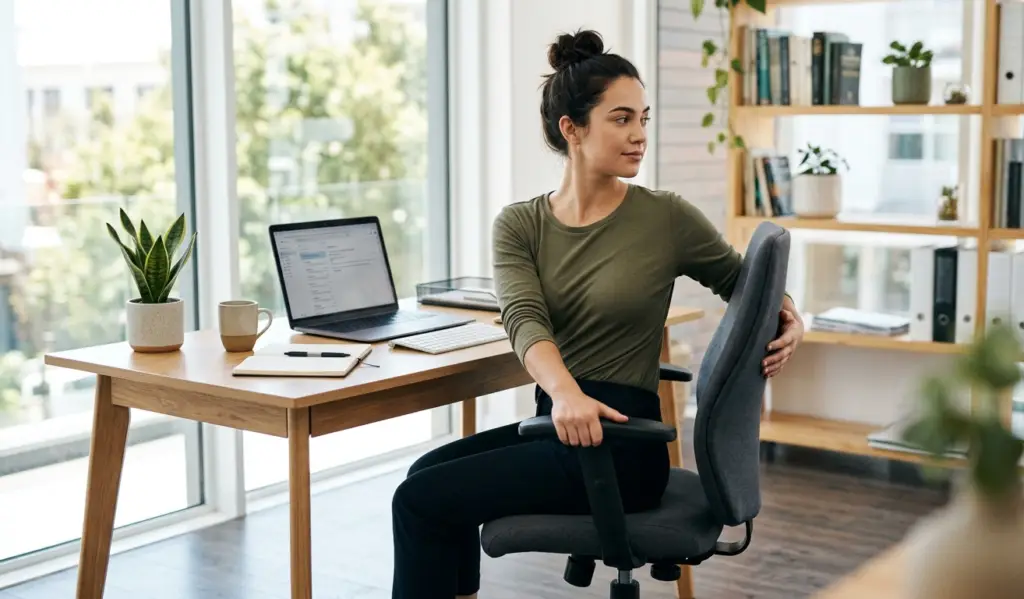
Back pain is one of the most common health complaints worldwide, especially for people who spend long hours sitting at a desk, working from home, or driving. If you are dealing with stiffness, tension, or chronic discomfort, the good news is that you do not need a gym or fancy equipment to find relief. Chair exercises for back pain are simple, effective, and can be done almost anywhere. In this detailed guide, you will learn how chair exercises help relieve back pain, the best exercises you can start today, and expert tips to improve posture and reduce discomfort long term.
Why Chair Exercises Work for Back Pain Relief
Sitting for long periods puts pressure on your spine, tightens muscles, and weakens your core. Over time, this leads to poor posture, muscle imbalances, and pain in the lower back, upper back, and neck.
Chair exercises help by improving blood circulation, stretching tight muscles, strengthening weak muscles, supporting proper spinal alignment and reducing stiffness and inflammation. These movements are especially helpful for office workers, students, seniors, and anyone with limited mobility.
Common Causes of Back Pain from Sitting
Before jumping into exercises, it helps to understand what actually causes back pain in the first place. Most people think back pain happens suddenly, but in reality it builds up slowly due to daily habits, especially prolonged sitting.
1. Poor posture
Slouching, leaning forward toward a screen, or sitting without proper back support puts uneven pressure on your spine. Over time, this can strain the muscles in your lower and upper back. Poor posture also affects your shoulders and neck, which can make the pain feel even worse. Many people do not realize they are sitting incorrectly until discomfort becomes constant.
2. Weak core muscles
Your core muscles, including your abdominal muscles and lower back muscles, act like a natural support system for your spine. When these muscles are weak, your back has to work harder to hold you upright. This leads to fatigue, stiffness, and pain. Strengthening your core is one of the most important steps in reducing long-term back discomfort.
3. Tight hip flexors
Hip flexors are muscles that connect your upper legs to your lower spine. When you sit for long hours, these muscles stay in a shortened position for too long. Over time, they become tight and pull your pelvis forward, which creates extra pressure on your lower back. This is one of the most common hidden causes of lower back pain in office workers.
4. Lack of movement
The human body is designed to move, not stay in one position for hours. When you sit for too long without breaks, blood circulation slows down and muscles become stiff. This lack of movement reduces flexibility and increases discomfort in the spine, hips, and shoulders. Even small movements during the day can make a big difference in preventing pain buildup.
Best Chair Exercises for Back Pain Relief
These are some of the most effective seated exercises to reduce back pain. You can do them at home or at work without drawing attention.
1. Seated Cat Cow Stretch
This is one of the best chair yoga exercises for spine mobility.
How to do it: Sit upright with feet flat on the floor. Place hands on your knees. Inhale and arch your back, lifting your chest. Exhale and round your spine, tucking your chin.
Benefits: It improves spinal flexibility and reduces stiffness in the lower and upper back
Tip: Repeat 10 to 15 times slowly for best results.
2. Seated Forward Bend
A great stretch for the lower back and hamstrings.
Steps: Sit at the edge of your chair. Slowly bend forward from your hips. Reach toward your toes or floor. Let your head and neck relax.
Benefits: It relieves tension in the lower back and stretches tight muscles from sitting.
3. Seated Spinal Twist
This exercise improves mobility and reduces stiffness.
How to perform: Sit upright. Place your right hand on the back of the chair. Twist your torso to the right. Hold for 10 to 15 seconds. Repeat on the other side.
Benefits: It increases spine flexibility and helps relieve middle back pain.
4. Shoulder Blade Squeeze
Perfect for upper back pain relief.
Instructions: Sit tall with arms relaxed. Squeeze your shoulder blades together. Hold for 5 seconds. Release and repeat.
Benefits: It improves posture and reduces tension in upper back and shoulders.
5. Seated Knee to Chest Stretch
This targets the lower back and hips.
Steps: Sit upright. Bring one knee toward your chest. Hold it with both hands. Hold for 15 seconds, then switch legs.
Benefits: It relieves lower back pain and improves hip flexibility.
6. Neck Stretch
Back pain is often connected to neck tension.
How to do it: Sit straight. Gently tilt your head to one side. Hold for 10 seconds. Repeat on both sides.
Benefits: Reduces neck and upper back tension and improves overall posture.
7. Seated Pelvic Tilt
A subtle but powerful movement for lower back support.
Instructions: Sit upright. Tilt your pelvis forward to arch your back slightly. Then tilt it backward to flatten your lower back. Repeat slowly.
Benefits: Strengthens core muscles and supports spinal alignment.
8. Arm Raises
This simple move helps relieve upper back tightness.
Steps: Sit upright. Raise both arms overhead. Stretch upward as much as possible. Hold for a few seconds and lower
Benefits: It stretches upper back and shoulders and improves circulation.
Key Statistics on Back Pain from Sitting
Understanding real-world data helps highlight why chair exercises for back pain relief are so important, especially for office workers and people with sedentary lifestyles.
| Topic | Statistic | What It Means |
| Global back pain prevalence | Around 80% of adults experience back pain at some point in life | Back pain is extremely common and affects most people eventually |
| Office workers risk | People who sit for 6 to 8+ hours daily have significantly higher risk of chronic back pain | Long sitting hours directly increase spinal stress |
| Sitting duration impact | Sitting for more than 8 hours a day is linked to increased musculoskeletal discomfort | Prolonged sitting reduces circulation and stiffens muscles |
| Exercise benefit | Regular stretching and movement can reduce back pain symptoms by up to 30% to 50% in many cases | Chair exercises can provide noticeable relief when done consistently |
| Posture connection | Poor sitting posture is one of the leading contributors to lower back strain | Simple posture correction can significantly reduce pain |

How Often Should You Do Chair Exercises?
For best results, consistency is key. Do these exercises every 1 to 2 hours if you sit for long periods. Spend at least 5 to 10 minutes per session. Combine stretching with posture correction. Even small movements throughout the day can make a big difference in reducing chronic back pain.
Tips to Prevent Back Pain While Sitting
Chair exercises work even better when combined with healthy habits.
Maintain proper posture: Keep your back straight. Shoulders relaxed. Feet flat on the floor.
Use an ergonomic chair: Support your lower back with a cushion if needed.
Take regular breaks: Stand up, walk around, and stretch every hour.
Adjust your workspace: Keep your screen at eye level and avoid leaning forward.
Who Can Benefit from Chair Exercises?
Chair exercises are suitable for almost everyone, including office workers, remote workers, students, seniors, and people recovering from injury and beginners with limited mobility. They are low impact, safe, and easy to modify based on your comfort level.
Final Thoughts
Back pain does not have to be a daily struggle. With simple chair exercises, you can reduce discomfort, improve posture, and support your overall spinal health without leaving your seat. Start small, stay consistent, and listen to your body. Over time, these small movements can lead to big improvements in how you feel every day. If you sit for long hours, think of these exercises not as optional but essential. Your back will thank you.
FAQs:
1. How often should I do chair exercises for back pain?
You can do them every 1 to 2 hours if you sit for long periods. Even 5 to 10 minutes a few times a day can help reduce stiffness and pain.
2. Can chair exercises really help with lower back pain?
Yes, regular chair exercises can reduce lower back pain by improving flexibility, strengthening core muscles, and improving posture.
3. Are chair exercises safe for seniors?
Yes, chair exercises are low-impact and generally safe for seniors. They can be modified based on comfort and mobility levels.
4. Do I need any equipment for these exercises?
No, you only need a stable chair. No special equipment or gym setup is required.
5. How long does it take to see results?
Many people feel relief within a few days of consistent practice, but long-term improvement usually takes a few weeks of regular exercise.
