
Understand Your Fitness Priorities
Before diving into workouts or activity hacks, it is essential to identify why staying active matters to you. Are you focused on weight management, reducing stress, improving heart health, or increasing flexibility? By understanding your priorities, you can tailor your activities to match your goals. This approach ensures you are not just moving for the sake of it, but making meaningful progress even in limited time.
For busy professionals, clarity around fitness goals can make a huge difference. For example, if your primary aim is stress relief, short sessions of yoga, stretching, or brisk walking can be just as valuable as intense cardio workouts. On the other hand, if your goal is building strength, even 20 minutes of bodyweight exercises at home can yield results over time.
Integrate Movement into Daily Life
Not every fitness session needs to be a structured workout. Integrating movement into your daily activities can help you stay active without dedicating extra hours to the gym. Here are several ways to seamlessly add physical activity into a busy day:
1. Active Commuting
Walking or biking to work, even for part of your commute, is a great way to sneak in exercise without setting aside extra time. If you rely on public transport, try getting off one or two stops earlier and walking the remaining distance. For drivers, parking further away from your office or taking the long route through your building can help you accumulate more steps. Even carrying groceries or small packages while walking adds resistance and increases calorie burn. Over time, these small adjustments can contribute to improved cardiovascular health and better energy levels throughout the day.
2. Walking Meetings
Traditional sit-down meetings can be replaced with walking meetings whenever possible. This not only keeps you moving but can also foster more creativity and improve focus. Walking side by side with colleagues encourages open discussion and can reduce the stress often associated with formal meeting settings. Many companies now recognize the benefits of walking meetings and actively encourage them as part of employee wellness programs. Even a short 15-20 minute walk while discussing agenda points can be surprisingly effective in both exercise and productivity.
3. Desk Exercises
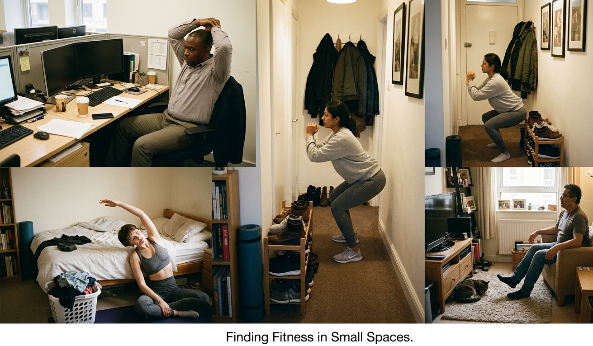
Long hours at a desk can cause stiffness, poor posture, and reduced circulation. Luckily, you don’t need to leave your workstation to stay active. Simple desk exercises, such as seated leg lifts, seated marches, shoulder rolls, or using a resistance band for arm stretches, can help keep your muscles engaged. Taking short 2-3 minute movement breaks every hour is especially beneficial. Over time, these micro-movements improve posture, reduce fatigue, and even enhance concentration and productivity.
4. Household Chores as Exercise
Many people underestimate the physical effort involved in household chores. Vacuuming, scrubbing floors, gardening, or washing windows can all serve as forms of exercise. By approaching chores with intention, moving briskly, or adding extra effort, you can increase your heart rate and burn more calories. For example, turning gardening into a small circuit of digging, planting, and bending can strengthen the legs, core, and back muscles. Not only do you maintain a clean, organized home, but you also stay physically active without having to schedule a separate workout.
5. Stair Climbing
If your daily routine involves multi-story buildings, stairs can become one of your best fitness allies. Choosing stairs over elevators is a simple yet highly effective form of cardio. Climbing stairs strengthens your legs, glutes, and core while improving cardiovascular endurance. You can even increase intensity by taking two steps at a time or carrying a light backpack. Over time, consistent stair climbing can lead to improved leg strength, better posture, and a boost in overall energy levels.
Prioritize Short, High-Impact Workouts
When your schedule is packed, longer workouts may not be feasible. That is where high-intensity interval training (HIIT) or micro-workouts come in. Short, focused sessions can deliver significant fitness benefits in as little as 10 to 20 minutes.
- HIIT Workouts: These involve short bursts of intense activity followed by brief rest periods. Exercises like jumping jacks, push-ups, burpees, or squats can be done at home or in the office. A 15-minute HIIT session can burn calories, improve endurance, and boost metabolism.
- Bodyweight Circuits: Even without equipment, bodyweight exercises are effective. Try circuits of push-ups, lunges, planks, and squats for 15-20 minutes to target major muscle groups.
- Desk Yoga and Stretching: Short stretching routines improve flexibility, relieve tension, and promote better posture. Simple movements like spinal twists, neck rolls, and seated forward bends can be done multiple times a day.
Consistency is key. Even if each session is brief, daily engagement helps maintain muscle tone, energy levels, and overall health.
Leverage Technology and AI Tools
Technology can be a major ally for busy individuals trying to stay active. From fitness apps to AI-driven tools, these solutions provide guidance, motivation, and progress tracking.
- Fitness Apps: Apps like MyFitnessPal, Fitbod, or 7 Minute Workout offer personalized exercise plans, track workouts, and provide reminders. Many apps allow scheduling workouts into even the busiest calendars.
- AI Fitness Coaches: Advanced AI chatbots and virtual trainers can suggest exercises based on your fitness level, available time, and equipment. They adapt routines in real-time, ensuring you remain challenged without overexertion.
- Wearable Technology: Devices like smartwatches or fitness trackers monitor steps, heart rate, and sleep patterns. AI-driven insights can help you optimize activity times, set achievable goals, and even nudge you to move during long sedentary periods.
These digital solutions make it easier to integrate movement into your life, track progress, and maintain motivation even when time is scarce.
Schedule Activity like a Meeting
One of the most effective strategies for staying active with a busy schedule is treating workouts as non-negotiable appointments. Block time in your calendar for exercise just like you would for a work meeting. This approach reduces the likelihood of skipping sessions due to conflicting priorities. Tips for scheduling workouts:
- Morning Sessions: Exercising in the morning ensures you start your day with energy and reduces the risk of skipping due to unexpected tasks.
- Lunchtime Workouts: A quick walk or 20-minute gym session during lunch can boost productivity and mental clarity for the afternoon.
- Evening Flexibility: If mornings or afternoons are hectic, short evening workouts can still provide benefits. Consider family walks, home circuits, or online workout videos.
Consistency matters more than duration. Even 15-30 minutes of regular activity, scheduled intentionally, can produce significant health benefits over time.
Make Use of Multitasking Opportunities
Busy schedules often leave little dedicated time for workouts. Multitasking can bridge the gap between movement and other responsibilities. Here are some ideas:
- Podcasts and Audiobooks While Walking: Pair learning or entertainment with movement. Walking while listening to a podcast or audiobook keeps your mind engaged while your body stays active.
- Exercise While Watching TV: Incorporate squats, lunges, or resistance band exercises during commercials or while streaming shows.
- Play with Kids or Pets: Engaging in active play counts as exercise. Running, playing catch, or going for walks together keeps the family active and strengthens bonds.
By combining activity with routine tasks, you create movement opportunities without needing extra hours in your day.
The Impact of Daily Activity on Health
The table below summarizes key statistics from research studies on how daily movement affects various aspects of health:
| Type of Activity | Recommended Duration | Key Health Benefits | Supporting Statistic |
| Walking | 30 minutes/day | Improves cardiovascular health, boosts mood | People who walk 10,000 steps daily reduce risk of heart disease by 20% (Source: American Heart Association) |
| Stair Climbing | 10-15 minutes/day | Strengthens legs and core, burns calories | Climbing stairs for 15 min/day can burn up to 150 calories and improve VO2 max (Source: Harvard Health) |
| High-Intensity Interval Training (HIIT) | 15-20 minutes/session | Burns fat, improves endurance | HIIT 3 times/week reduces abdominal fat by 4-7% in 12 weeks (Source: Journal of Obesity) |
| Desk Exercises & Stretching | 5-10 minutes/hour | Reduces stiffness, prevents musculoskeletal issues | Regular stretching reduces back pain by 30% in office workers (Source: National Institute for Occupational Safety and Health) |
| Active Commuting (walking/biking) | 20-40 minutes/day | Improves heart health, energy levels | Adults who commute actively have a 27% lower risk of obesity (Source: British Journal of Sports Medicine) |
Focus on Small Wins
For busy individuals, the key to sustaining an active lifestyle is celebrating small wins. Not every workout has to be perfect or last an hour. Even brief sessions contribute to overall health.
- Take the stairs instead of the elevator.
- Walk 5 minutes during breaks.
- Do a quick 10-minute stretching routine in the morning.
- Stand up and move every 30-60 minutes while working.
These small wins accumulate, improving energy, mood, and long-term fitness without requiring dramatic schedule changes.
Prioritize Recovery and Mindfulness
Staying active is only part of the equation. Recovery, sleep, and mindfulness play crucial roles in maximizing the benefits of movement. Poor rest can reduce energy, impair performance, and increase stress. Incorporate mindfulness practices such as meditation, deep breathing, or yoga to enhance mental clarity, reduce tension, and support overall well-being.
Additionally, even short naps or intentional rest periods during busy days can aid muscle recovery and cognitive function, helping you remain productive while staying active.
Conclusion
Staying active with a busy schedule is challenging but achievable. The key is to prioritize movement, integrate activity into daily life, leverage technology, and focus on consistency over perfection. From high-intensity micro-workouts to walking meetings and AI-driven fitness guidance, there are countless ways to stay fit, energized, and healthy despite time constraints.
Remember, staying active is not about perfection or spending hours at the gym. It is about creating habits, embracing small wins, and intentionally moving your body whenever possible. Start with a few minutes each day, build momentum, and gradually expand your routine. Your body, mind, and overall health will thank you for it.
FAQs:
1. How can I stay active if I only have 10 minutes a day?
Even 10 minutes can be effective. Try high-intensity interval training (HIIT), a quick bodyweight circuit, or brisk walking. Consistency matters more than duration.
2. Can I get fit without going to the gym?
Yes! Bodyweight exercises, walking, stairs, home workouts, and stretching routines can all improve fitness without any gym equipment.
3. How do I motivate myself to exercise when I am extremely busy?
Schedule workouts like appointments, use AI fitness apps or reminders, and start small. Pairing exercise with podcasts or music can also make it more enjoyable.
4. Is it better to exercise in the morning or evening?
The best time is when you can consistently fit it in. Morning boosts energy and consistency, while evening workouts can help relieve stress and unwind.
5. Can small daily activities really improve health?
Absolutely. Walking, climbing stairs, desk stretches, and short workouts all contribute to better heart health, energy levels, and overall well-being.
