
Heartburn during pregnancy is one of the most common discomforts experienced by expecting mothers. If you are feeling a burning sensation in your chest or throat after eating, you are not alone. Many pregnant women experience heartburn, especially during the second and third trimesters.
The good news is that while heartburn can be uncomfortable, it is usually not harmful to you or your baby. Understanding why it happens and learning safe ways to manage it can make your pregnancy much more comfortable. In this complete guide, you will learn everything you need to know about heartburn during pregnancy, including its causes, symptoms, safe treatments, home remedies, foods to eat, foods to avoid and prevention tips.
What Is Heartburn During Pregnancy?
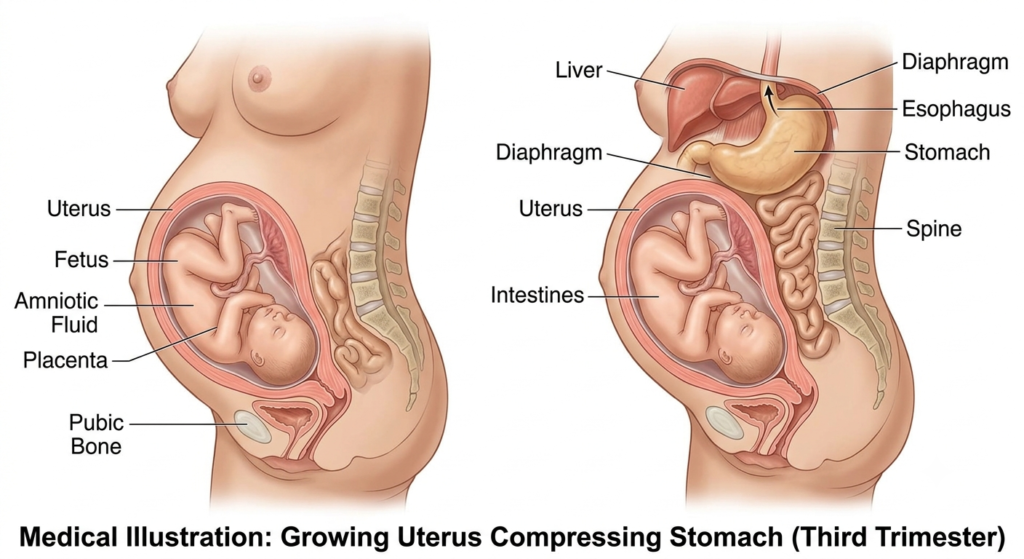
Heartburn is a burning feeling in the chest that occurs when stomach acid moves upward into the esophagus. The esophagus is the tube that carries food from your mouth to your stomach. Despite its name, heartburn has nothing to do with your heart. The discomfort comes from stomach acid irritating the lining of your esophagus. During pregnancy, hormonal changes and the growing baby make acid reflux more common than usual.
Why Does Heartburn Happen During Pregnancy?
There are two main reasons why pregnant women experience heartburn.
1. Pregnancy Hormones
Your body produces higher levels of progesterone during pregnancy. This hormone relaxes many muscles throughout your body, including the valve between the stomach and esophagus. When this valve relaxes too much, stomach acid can travel upward, causing heartburn.
2. Growing Baby
As your baby grows, your uterus expands and places pressure on your stomach. This pressure can push stomach contents upward, especially after meals or when lying down.
Heartburn by Pregnancy Trimester
Heartburn by pregnancy trimester is given as below:
| Pregnancy Stage | What Happens |
| First Trimester | Hormonal changes begin relaxing digestive muscles, causing mild heartburn for some women. |
| Second Trimester | Heartburn often becomes more frequent because hormones continue affecting digestion. |
| Third Trimester | The growing baby presses against the stomach, making heartburn more common and sometimes more intense. |
Common Symptoms of Heartburn during Pregnancy
Heartburn symptoms can vary from person to person. Common signs include:
- Burning sensation in the chest
- Burning feeling in the throat
- Sour or bitter taste in the mouth
- Acid coming back into the mouth
- Difficulty swallowing
- Frequent burping
- Feeling of food coming back up
- Chest discomfort after meals
- Symptoms that worsen when lying down
- Nighttime heartburn
Some women experience symptoms only occasionally, while others deal with heartburn almost every day.
Pregnancy Heartburn Worse
Certain foods and habits can trigger heartburn. Common triggers include:
- Spicy foods
- Fried foods
- Fatty meals
- Chocolate
- Coffee
- Tea with caffeine
- Carbonated drinks
- Citrus fruits
- Tomato sauce
- Onions
- Garlic
- Peppermint
- Large meals
- Eating too quickly
- Lying down immediately after eating
Keeping a food diary can help identify your personal triggers.
Foods That May Help Reduce Heartburn
Although no single food completely prevents heartburn, some foods are easier on the stomach. Good choices include:
- Oatmeal
- Bananas
- Apples
- Brown rice
- Whole grain bread
- Plain yogurt
- Low fat milk
- Lean chicken
- Turkey
- Fish
- Steamed vegetables
- Sweet potatoes
- Cucumbers
- Green beans
- Watermelon
- Pears
Eating balanced meals can improve digestion and reduce symptoms.
Foods to Avoid During Pregnancy Heartburn
If heartburn is becoming a daily problem, consider limiting:
- Fried chicken
- French fries
- Pizza
- Burgers
- Hot peppers
- Chili sauce
- Tomato ketchup
- Citrus juice
- Orange juice
- Lemon juice
- Soft drinks
- Energy drinks
- Coffee
- Chocolate desserts
- Rich creamy foods
Everyone is different, so avoid foods that trigger your symptoms.
Safe Home Remedies for Heartburn during Pregnancy
Many pregnant women find relief through simple lifestyle changes.
Eat Smaller Meals: Instead of three large meals, eat five or six smaller meals throughout the day.Smaller portions reduce pressure on your stomach.
Eat Slowly: Chew your food thoroughly and avoid rushing through meals.This supports better digestion.
Stay Upright After Eating: Remain sitting or standing for at least two to three hours after meals.Avoid lying down immediately.
Sleep with Your Head Elevated: Raise the head of your bed slightly or use extra pillows.Gravity helps keep stomach acid where it belongs.
Wear Loose Clothing: Tight clothing around your waist can increase pressure on your stomach.Comfortable clothing may reduce symptoms.
Drink Fluids between Meals: Instead of drinking large amounts during meals, sip water throughout the day.This may reduce stomach fullness.
Safe Medications for Heartburn during Pregnancy
If lifestyle changes are not enough, your healthcare provider may recommend medication. Possible options include:
- Calcium based antacids
- Certain acid reducing medications
- Prescription medicines if symptoms become severe
Never start any medication during pregnancy without discussing it with your healthcare provider. Some heartburn medicines are considered safe during pregnancy, while others should be avoided.
Can Heartburn Harm My Baby?
No. Heartburn is uncomfortable for you, but it generally does not harm your developing baby. Your baby continues growing normally even if you experience frequent heartburn. The main concern is making sure you remain comfortable, hydrated, and able to eat enough nutritious food.
Severe Heartburn and Baby Will Have Lots of Hair
You may have heard that severe pregnancy heartburn means your baby will be born with lots of hair. Interestingly, some research has found a possible connection between pregnancy heartburn and newborn hair. However, this is not always true. Some women with severe heartburn have babies with very little hair, while others who never experience heartburn have babies with thick hair. It is best to treat this as a fun pregnancy myth with a small amount of scientific support rather than a reliable prediction.
You Contact Your Doctor
Most pregnancy heartburn is normal. However, contact your healthcare provider if you experience:
- Severe chest pain
- Difficulty swallowing
- Vomiting blood
- Black stools
- Unexplained weight loss
- Persistent vomiting
- Heartburn that does not improve with treatment
- Symptoms that become much worse suddenly
Chest pain can sometimes be caused by conditions unrelated to heartburn, so it is important to seek medical advice if you are unsure.
Tips to Prevent Heartburn during Pregnancy
You may not be able to eliminate heartburn completely, but these habits can reduce how often it occurs.
- Eat Smaller Portions: Large meals increase stomach pressure.
- Avoid Late Night Eating: Finish dinner at least two to three hours before bedtime.
- Limit Trigger Foods: Notice which foods make your symptoms worse.
- Stay Active: Gentle walking after meals may improve digestion.
- Maintain Healthy Pregnancy Weight Gain: Follow your healthcare provider’s recommendations for healthy weight gain during pregnancy.
- Sleep on Your Left Side: Many pregnant women find that sleeping on the left side reduces acid reflux compared to sleeping flat on the back.
Quick Summary Table
Quick Summary Table is given as below:
| Topic | Key Information |
| Main Cause | Pregnancy hormones and pressure from the growing uterus |
| Most Common Symptom | Burning sensation in the chest |
| Common Triggers | Spicy foods, fatty foods, large meals, lying down after eating |
| Safe Lifestyle Changes | Smaller meals, eating slowly, sleeping with head elevated |
| Baby’s Safety | Heartburn usually does not harm the baby |
| When to See a Doctor | Severe pain, vomiting blood, difficulty swallowing, persistent symptoms |
Conclusion:
Heartburn during pregnancy is extremely common and usually becomes more noticeable as your pregnancy progresses. Hormonal changes relax the muscles that normally keep stomach acid in place, while your growing baby places additional pressure on your stomach. Together, these changes make acid reflux more likely. Fortunately, many women find relief through simple lifestyle adjustments such as eating smaller meals, avoiding trigger foods, staying upright after eating, and sleeping with the head slightly elevated. If symptoms become frequent or severe, speak with your healthcare provider about pregnancy safe treatment options.
Every pregnancy is different. What works well for one person may not work for another, so pay attention to your body’s signals and work with your healthcare provider to find the safest and most effective approach. By understanding the causes, recognizing the symptoms early, and following healthy eating and lifestyle habits, you can reduce discomfort and focus on enjoying a healthier, more comfortable pregnancy.
FAQs:
- Is heartburn an early sign of pregnancy?
It can be for some women because hormonal changes begin early, but it is not considered one of the most reliable early pregnancy symptoms.
- When does pregnancy heartburn usually start?
It may begin during the first trimester, although it is much more common during the second and third trimesters.
- Is heartburn worse at night?
Yes. Lying flat allows stomach acid to move more easily into the esophagus.
- Can drinking milk help heartburn?
Some women find temporary relief from low fat milk, while others notice no improvement. Individual responses vary.
- Can I take antacids while pregnant?
Some antacids are considered safe during pregnancy, but always consult your healthcare provider before taking any medication.
- Will heartburn disappear after giving birth?
Yes. For most women, heartburn improves quickly after delivery as hormone levels return to normal and pressure on the stomach decreases.
