
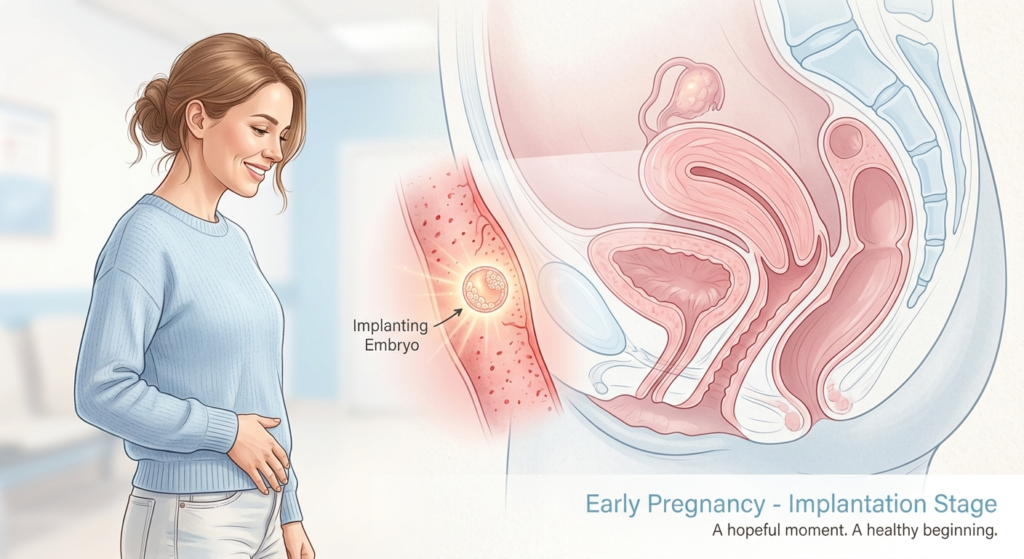
Pregnancy week 3 is one of the most important stages of early pregnancy, even though many women have no idea they are pregnant yet. This is the week when fertilization has already taken place, the tiny developing embryo travels through the fallopian tube, and implantation usually begins. Implantation is the process where the fertilized egg attaches itself to the lining of the uterus, making pregnancy officially established. This complete guide answers all those questions in simple language while explaining everything you need to know about pregnancy week 3.
Pregnancy Week 3 at a Glance
| Pregnancy Week | What’s Happening |
| Week 3 | Fertilization has occurred and implantation usually begins. |
| Baby’s Size | About the size of a pinhead or tiny poppy seed. |
| Major Development | Cells rapidly divide and prepare to form the placenta and baby. |
| Hormone Changes | Human Chorionic Gonadotropin (hCG) starts developing after implantation. |
| Common Symptoms | Implantation bleeding, mild cramping, fatigue, tender breasts, bloating, or no symptoms at all. |
During Pregnancy Week 3
Week 3 begins shortly after ovulation if sperm successfully fertilizes the egg. The fertilized egg, now called a zygote, immediately starts dividing into multiple cells. Over the next few days, these cells continue multiplying as they travel toward the uterus. By the time they arrive, the tiny cluster of cells is known as a blastocyst.
The blastocyst contains two important groups of cells one group will eventually become your baby. The other group develops into the placenta, which provides oxygen and nutrients throughout pregnancy. Once the blastocyst reaches the uterus, it searches for the perfect place to implant into the thick uterine lining. This process is known as implantation.
What Is Implantation?
Implantation is when the fertilized egg burrows into the uterine lining. This allows nutrients and oxygen to pass from mother to baby and marks the beginning of a healthy pregnancy. Implantation usually occurs 6 to 12 days after ovulation, around 7 to 10 days after fertilization and several days before your expected period. Once implantation is complete, your body begins producing the pregnancy hormone called hCG. This hormone is what home pregnancy tests detect.
Early Implantation Signs
Every pregnancy is different. Some women notice several implantation symptoms, while others experience none at all. Here are the most common implantation signs.
1. Implantation Bleeding
Light spotting is one of the earliest pregnancy symptoms. Characteristics include:
- Light pink or brown discharge
- Very small amount of blood
- Lasts a few hours to two days
- Usually lighter than a menstrual period
Unlike a normal period, implantation bleeding rarely becomes heavy.
2. Mild Implantation Cramping
Some women feel slight cramping when implantation occurs. The cramps may feel like:
- Mild pulling
- Light pinching
- Gentle pressure
- Tingling sensation
Implantation cramps are usually much milder than menstrual cramps.
3. Breast Tenderness
Hormonal changes begin very early. Many women notice:
- Sore breasts
- Tingling nipples
- Fullness
- Increased sensitivity
These changes happen because hormone levels begin rising after implantation.
4. Fatigue
Feeling unusually tired is another common early pregnancy symptom. As progesterone increases, your body begins conserving energy to support pregnancy. Many women feel exhausted before even missing their first period.
5. Bloating
Hormonal changes can slow digestion. This may lead to:
- Gas
- Mild constipation
- Abdominal fullness
- Slight bloating
These symptoms often resemble premenstrual syndrome (PMS).
6. Increased Basal Body Temperature
Women tracking fertility may notice their basal body temperature remains elevated after ovulation. A sustained higher temperature for more than two weeks can indicate pregnancy.
7. Heightened Sense of Smell
Although more common later in pregnancy, some women become sensitive to smells very early. Foods, perfumes, and cooking odors may suddenly seem stronger.
8. Mood Changes
Hormonal fluctuations affect brain chemistry. You may notice:
- Emotional sensitivity
- Irritability
- Happiness
- Anxiety
- Mood swings
These are completely normal.
Feel Implantation Happening:
Most women cannot actually feel implantation taking place. However, some report:
- Light cramping
- Mild pelvic discomfort
- Brief twinges
- Lower abdominal pressure
These sensations are usually very subtle.
Baby Look at Week 3
At week 3, your baby is still microscopic. The developing embryo is:
- Smaller than a grain of rice
- About the size of a pinhead
- Made of rapidly dividing cells
- Preparing to develop into every organ and body system
Although tiny, this stage is incredibly important because every future organ begins with these early cells.
How Big Is the Baby?
Your baby measures only around 0.1 to 0.2 millimeters. Even though you cannot see it with the naked eye, millions of biological processes are already taking place.
Hormonal Changes during Pregnancy Week 3
Several hormones begin working together.
Human Chorionic Gonadotropin (hCG)
This hormone begins rising after implantation. Functions include:
- Supporting early pregnancy
- Preventing menstruation
- Helping maintain progesterone production
- Triggering positive pregnancy tests
Progesterone
Progesterone prepares the uterus for pregnancy. It helps:
- Maintain the uterine lining
- Reduce uterine contractions
- Support embryo development
Estrogen
Estrogen promotes:
- Blood flow
- Placenta development
- Growth of the uterus
Positive Pregnancy Test in Week 3:
Sometimes yes, but often no. Because implantation may have only recently occurred, hCG levels may still be too low for detection. For the most accurate results:
- Wait until the first day of your missed period.
- Use first morning urine.
- Follow test instructions carefully.
If the first test is negative but your period does not start, test again after two to three days.
Symptoms That Are Completely Normal
Many women worry because they experience different symptoms than others. During pregnancy week 3, it is perfectly normal to have:
- No symptoms
- Mild cramping
- Spotting
- Fatigue
- Bloating
- Tender breasts
- Mood swings
- Increased urination
- Food aversions
- Increased appetite
Every pregnancy develops differently.
Foods to Eat During Pregnancy Week 3
Nutrition becomes important immediately after conception. Focus on nutrient-rich foods including:
- Leafy green vegetables
- Citrus fruits
- Whole grains
- Lean proteins
- Eggs
- Dairy products
- Beans
- Lentils
- Nuts
- Seeds
- Fresh fruits
Drink plenty of water every day.
Folic Acid Is Essential
One of the most important nutrients during early pregnancy is folic acid. Benefits include:
- Supports healthy brain development
- Helps form the neural tube
- Reduces the risk of birth defects
- Supports healthy cell growth
Doctors generally recommend 400 to 800 micrograms daily before conception and during early pregnancy.
Foods to Avoid
If you believe you may be pregnant, avoid:
- Raw seafood
- Undercooked meat
- Raw eggs
- Unpasteurized dairy products
- Excess caffeine
- Alcohol
- Smoking
- Recreational drugs
These can affect early fetal development.
Healthy Lifestyle Tips for Pregnancy Week 3
Take care of your body with healthy habits.
- Stay Active: Gentle exercise such as Walking, Prenatal yoga, Stretching and swimming can improve circulation and reduce stress.
- Get Enough Sleep: Aim for 7 to 9 hours of quality sleep each night.
- Reduce Stress: Helpful activities include Deep breathing, Meditation, Reading and Listening to calming music
- Stay Hydrated: Drink enough water throughout the day to support healthy circulation and overall wellness.
You Call Your Doctor
Most implantation symptoms are harmless. However, contact your healthcare provider if you experience:
- Heavy bleeding
- Severe abdominal pain
- High fever
- Dizziness
- Fainting
- Shoulder pain
- Persistent severe cramping
These symptoms may require medical evaluation.
Final Thoughts
Pregnancy week 3 marks the beginning of an incredible journey. Although your baby is still microscopic, amazing changes are already taking place inside your body. Implantation is one of the most important milestones because it establishes the pregnancy and allows your baby to continue developing.
Whether you notice implantation bleeding, mild cramping, breast tenderness, fatigue, or no symptoms at all, every pregnancy is unique. The best approach during this stage is to focus on healthy nutrition, take a daily folic acid supplement, stay hydrated, get enough rest, and avoid harmful substances.
If you suspect you are pregnant, be patient before taking a home pregnancy test, as hCG levels need time to rise. If you ever experience heavy bleeding, severe pain, or other concerning symptoms, contact your healthcare provider promptly.
By understanding what happens during pregnancy week 3 and recognizing possible implantation signs, you can feel more confident and prepared as you move into the exciting weeks ahead.
FAQs:
- Is implantation always accompanied by bleeding?
No. Only some women experience implantation bleeding. Many healthy pregnancies have no spotting at all.
- Can implantation cramps be painful?
Implantation cramps are usually mild. Severe pain is not considered typical and should be evaluated by a healthcare professional.
- Does everyone have pregnancy symptoms in week 3?
No. Many women feel completely normal during week 3. Symptoms often become more noticeable after a missed period.
- Can implantation happen later than day 10?
Yes. Implantation can occur anywhere from 6 to 12 days after ovulation, depending on individual circumstances.
- Can I exercise during pregnancy week 3?
If you have no medical complications, light to moderate exercise is generally safe. Speak with your healthcare provider if you have concerns or a history of pregnancy complications.
