
Pregnancy is an exciting journey that lasts about 40 weeks, but many people are surprised to learn that Pregnancy Week 1 begins before conception actually happens. Medical professionals calculate pregnancy from the first day of your last menstrual period (LMP), not from the day the egg is fertilized.
This means that during Pregnancy Week 1, you are technically not pregnant yet. Instead, your body is preparing for ovulation and possible fertilization in the coming weeks. Understanding what happens during this stage can help you prepare for a healthy pregnancy and improve your chances of conception.In this complete guide, you will learn about Pregnancy Week 1 symptoms, body changes, hormonal changes, fertility tips, nutrition, lifestyle recommendations, and frequently asked questions.
What Is Pregnancy Week 1?
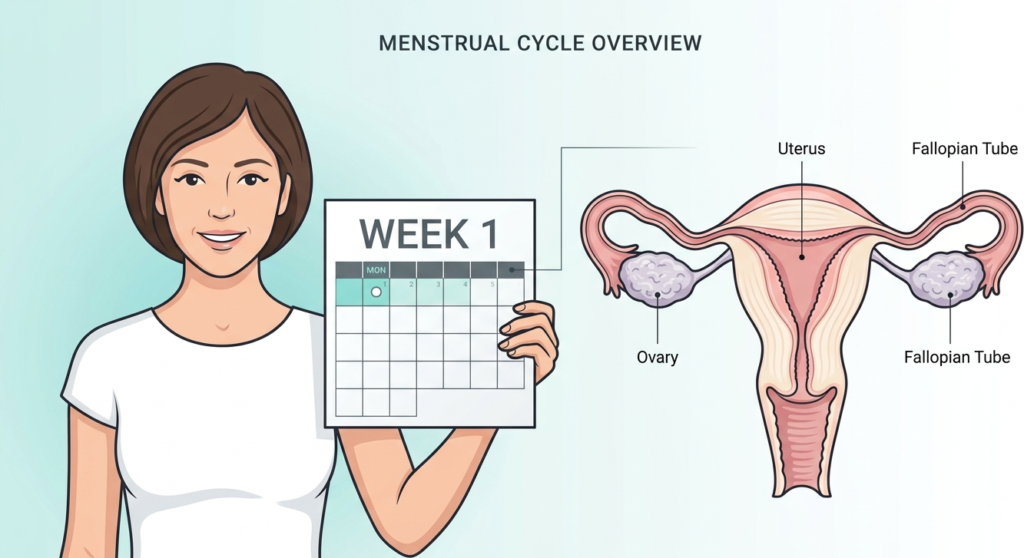
Pregnancy Week 1 starts on the first day of your menstrual period. Doctors use this method because it is difficult to determine the exact day fertilization occurs. Dating pregnancy from the first day of the last menstrual period provides a consistent timeline for healthcare providers.
At this stage you are having your menstrual period, the previous month’s uterine lining is shedding, your body is preparing to release a new egg. Fertilization has not yet occurred. Ovulation will usually happen around Day 14 in a 28-day cycle. This week is the beginning of your reproductive cycle that may lead to pregnancy.
Pregnancy Week 1 at a Glance
| Pregnancy Week 1 Details | Information |
| Pregnancy Status | Not technically pregnant yet |
| Baby Development | No embryo yet |
| Main Event | Menstrual period begins |
| Hormonal Activity | Estrogen and progesterone are low |
| Ovulation | Usually occurs around Day 14 |
| Medical Dating | Starts from Last Menstrual Period (LMP) |
What Happens in Your Body During Pregnancy Week 1?
Although there is no developing baby yet, your body is working hard to prepare for conception. Several important biological processes begin.
Your Uterus Resets: The thick lining built during the previous cycle is no longer needed if pregnancy did not occur. The uterus sheds this lining through menstruation. Once the period ends, a fresh uterine lining begins developing.
Hormones Begin to Change: Hormones play a major role during this stage. Important hormones include Follicle Stimulating Hormone (FSH), Luteinizing Hormone (LH), Estrogen and Progesterone. FSH encourages ovarian follicles to mature, preparing one egg for ovulation.Estrogen gradually increases after your period and helps rebuild the uterine lining.
Ovarian Follicles Start Developing: Inside your ovaries, several follicles begin growing. Usually, one follicle becomes dominant and releases a mature egg during ovulation. This egg may later become fertilized if sperm is present.
Pregnancy Week 1 Symptoms
Many women experience symptoms that are actually related to menstruation rather than pregnancy. Common Pregnancy Week 1 symptoms include:
1. Menstrual Bleeding
Your menstrual period is the most noticeable symptom. Flow may be:
- Light
- Moderate
- Heavy
This is completely normal.
2. Abdominal Cramps
Cramping occurs because the uterus contracts while shedding its lining. Most cramps improve within a few days.
3. Lower Back Pain
Hormonal changes may cause:
- Mild back pain
- Pelvic discomfort
- Muscle aches
4. Fatigue
Many women feel unusually tired during their period. Fatigue happens because of:
- Blood loss
- Hormonal fluctuations
- Low iron levels
Getting enough sleep and eating nutritious foods can help.
5. Mood Swings
Changing hormone levels affect brain chemicals responsible for mood. You may experience:
- Irritability
- Anxiety
- Emotional sensitivity
- Sadness
These emotions are common during menstruation.
6. Bloating
Hormonal changes can cause water retention. You may notice:
- A swollen abdomen
- Tight clothing
- Mild digestive discomfort
7. Breast Tenderness
Some women experience:
- Sore breasts
- Swollen breasts
- Sensitive nipples
These symptoms usually improve after the menstrual period.
8. Headaches
Hormone fluctuations can trigger headaches or migraines. Staying hydrated may reduce discomfort.
9. Food Cravings
Many women crave foods such as:
- Chocolate
- Salty snacks
- Carbohydrates
- Sweet foods
Hormonal shifts often influence appetite.
10. Acne Breakouts
Hormonal changes may increase oil production, leading to acne or oily skin.
Can You Feel Pregnant During Week 1?
No. Since fertilization has not occurred yet, true pregnancy symptoms cannot happen during Week 1. Symptoms commonly mistaken for pregnancy are actually related to menstruation and hormonal changes. Real pregnancy symptoms usually begin after implantation, which occurs about 6 to 12 days after ovulation.
Is There a Baby During Pregnancy Week 1?
Not yet. There is:
- No embryo
- No fetus
- No heartbeat
- No implantation
Your body is simply preparing for ovulation. Once fertilization occurs, the embryo begins developing.
Can You Take a Pregnancy Test During Week 1?
No. Pregnancy tests detect the hormone hCG. Since implantation has not happened, your body is not producing hCG. Testing now will almost always produce a negative result.
Nutrition during Pregnancy Week 1
If you are trying to conceive, now is the perfect time to improve your diet. Healthy nutrition before pregnancy supports fertility and early fetal development.
- Eat Plenty of Fruits: Choose Oranges, Apples, Berries, Bananas and Kiwi. These provide vitamins and antioxidants.
- Eat Leafy Vegetables: Excellent options include Spinach, Kale, Broccoli and Lettuce. These foods are rich in folate.
- Choose Whole Grains: Healthy carbohydrates include Brown rice, Oats, Whole wheat bread and Quinoa. Whole grains provide lasting energy.
- Add Lean Protein: Protein sources include Chicken, Fish (low mercury varieties), Eggs, Beans, Lentils and Tofu. Protein supports healthy cells and hormones.
- Healthy Fats: Include Avocados, Nuts, Seeds and Olive oil. Healthy fats support hormone production.
Start Taking Folic Acid
One of the most important things you can do before conception is begin taking folic acid. Doctors generally recommend 400 micrograms daily before pregnancy. Benefits include:
- Supports early brain development
- Reduces neural tube defects
- Helps healthy cell growth
Hydration Is Essential
Drink plenty of water every day. Aim for about 8 to 10 glasses daily. Proper hydration supports overall reproductive health.
Foods to Limit
If you are planning pregnancy, reduce or avoid:
- Alcohol
- Smoking
- Recreational drugs
- Excess caffeine
- Highly processed foods
- Sugary beverages
Healthy habits before conception can improve pregnancy outcomes.
Lifestyle Tips During Pregnancy Week 1
Preparing your body early is one of the best ways to support a healthy pregnancy.
Exercise Regularly
Moderate exercise helps to improve fertility, maintain healthy weight, reduce stress and improve circulation.
Good options include: Walking, Swimming, Yoga, Cycling and Stretching
Maintain a Healthy Weight
Being underweight or overweight may affect ovulation. A balanced diet combined with regular exercise supports reproductive health.
Get Enough Sleep
Aim for 7 to 9 hours every night. Quality sleep supports hormone balance. Reduce Stress because stress may affect fertility in some women. Helpful stress management techniques include:
- Meditation
- Reading
- Deep breathing
- Gentle exercise
- Spending time outdoors
Track Your Menstrual Cycle
Understanding your cycle helps predict ovulation. You can use:
- Calendar tracking
- Ovulation predictor kits
- Fertility tracking apps
- Basal body temperature monitoring
Medical Checkup Before Pregnancy
If you are planning to conceive, consider scheduling a preconception appointment. Your healthcare provider may:
- Review your medical history
- Check vaccinations
- Discuss medications
- Recommend prenatal vitamins
- Screen for health conditions
Preparing before pregnancy supports both maternal and baby health.
Emotional Changes during Pregnancy Week 1
Many women experience emotional ups and downs during menstruation. You may feel:
- Emotional
- Sensitive
- Irritable
- Tired
- Less energetic
These changes are completely normal and usually temporary.
Common Myths About Pregnancy Week 1
Some myths are given as below:
Myth 1: You Are Already Pregnant
Not exactly. Week 1 begins before conception.
Myth 2: You Can Feel the Baby
There is no embryo during Week 1. Any symptoms are menstrual symptoms.
Myth 3: Pregnancy Tests Work Immediately
Pregnancy tests only work after implantation produces hCG.
Myth 4: Healthy Habits Can Wait
The healthiest pregnancies often begin before conception. Good nutrition and prenatal vitamins should start early.
Pregnancy Week 1 Checklist
Use this checklist to prepare for the weeks ahead:
- Start taking folic acid.
- Eat a balanced, nutrient rich diet.
- Drink enough water.
- Get regular exercise.
- Sleep 7 to 9 hours each night.
- Avoid smoking and alcohol.
- Limit caffeine intake.
- Track your menstrual cycle.
- Schedule a preconception checkup if needed.
- Manage stress with healthy habits.
Final Thoughts
Pregnancy Week 1 marks the official beginning of the pregnancy timeline, even though conception has not yet occurred. During this stage, your body is preparing for ovulation by shedding the old uterine lining, balancing hormones, and developing a new egg.
While you will not experience true pregnancy symptoms yet, this week is one of the most important times to focus on your health. Eating nutritious foods, taking folic acid, staying active, getting enough sleep, and avoiding harmful substances can all support a healthy pregnancy in the weeks ahead.
If you are trying to conceive, understanding Pregnancy Week 1 gives you a strong foundation for the incredible journey ahead. Small healthy choices made today can have a lasting impact on both your future pregnancy and your baby’s development.
FAQs:
- Can I conceive during Pregnancy Week 1?
No. Conception usually occurs around ovulation, approximately two weeks after the first day of your period in a typical 28 day cycle.
- Is bleeding normal during Pregnancy Week 1?
Yes. The bleeding is your menstrual period.
- Should I start prenatal vitamins now?
Yes. If you are trying to become pregnant, starting prenatal vitamins before conception is highly recommended.
- Can stress affect fertility?
High stress may influence hormone balance and fertility for some people. Managing stress through healthy lifestyle habits can be beneficial.
- Can I exercise during Pregnancy Week 1?
Yes. Moderate exercise is encouraged unless your healthcare provider advises otherwise.
