
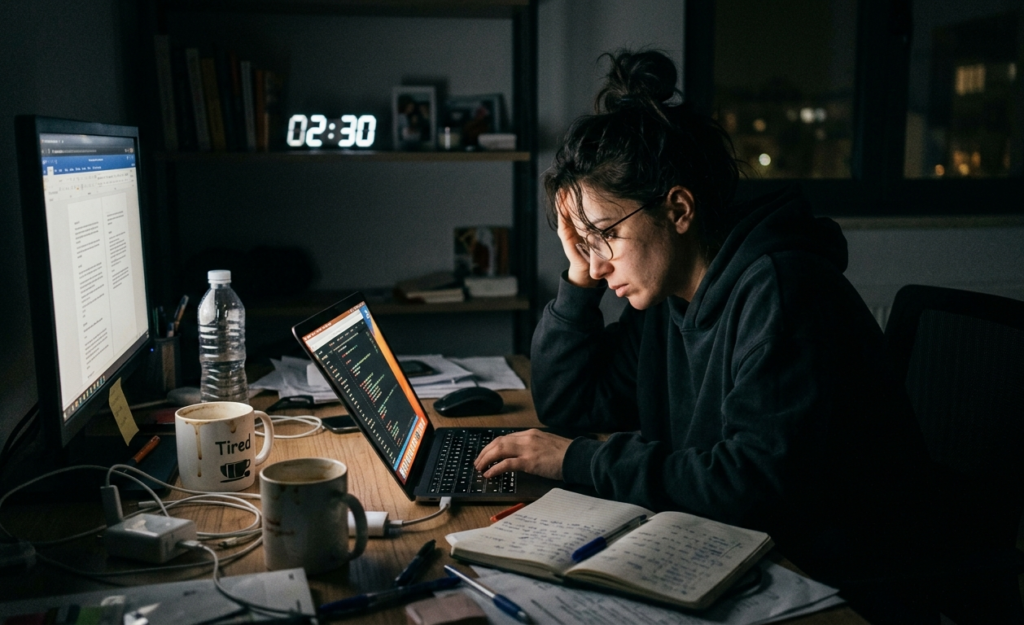
Late-night work has become increasingly common in today’s world. Whether you are working from home, managing freelance projects, studying for exams, or dealing with tight office deadlines, staying up late to finish work often feels unavoidable. But while it may seem productive in the moment, consistent late-night work can have serious effects on your physical health, mental well-being, sleep quality, and long-term lifestyle. In this detailed guide, we will break down how late-night work affects your health, the science behind it, common symptoms people ignore, and practical strategies to reduce the damage.
Why Late-Night Work Is So Common Today
Before we understand the impact, it is important to know why so many people work late at night. Some common reasons include heavy workload and tight deadlines, remote work flexibility, freelancing and global clients in different time zones, exam pressure among students, habitual procrastination followed by late-night catch-up, fewer distractions at night and digital devices making work accessible 24/7. While night hours may feel peaceful and productive, your body is biologically designed for a different rhythm.
Understanding Your Body Clock: Circadian Rhythm
Your body runs on a natural internal clock called the circadian rhythm. This biological system regulates sleep and wake cycles, hormone production, body temperature, energy levels and brain alertness. At night, your brain releases a hormone called melatonin, which helps you feel sleepy and prepares your body for rest. When you force yourself to work late into the night, you disrupt this natural cycle. This leads to circadian rhythm disruption, which is one of the biggest reasons behind long-term health issues related to late-night working.
How Late-Night Work Affects Your Health
Now let’s break down the real effects of late-night work on your body and mind.
1. Sleep Deprivation and Poor Sleep Quality
One of the most immediate effects of working late is sleep deprivation. When you sleep late or reduce sleep hours you do not reach deep sleep stages properly, your brain does not fully recover, memory consolidation is affected and you wake up feeling tired and unrefreshed. Even if you sleep 6 to 7 hours, sleeping at irregular times can still reduce sleep quality.
Common signs include:
- Difficulty waking up
- Constant tiredness during the day
- Afternoon energy crashes
- Poor concentration
Sleep deprivation and productivity are directly connected. Less sleep equals lower productivity the next day.
2. Increased Stress and Anxiety
Working late at night often increases mental stress. Here is why:
- Your brain stays overstimulated for longer hours
- You miss natural relaxation time
- Work feels never-ending
- Your stress hormones remain elevated
Over time, this can contribute to anxiety disorders, irritability, emotional instability and difficulty relaxing even during rest time. This is one of the major mental health and night shift work risks that people underestimate.
3. Weak Immune System
Your immune system repairs itself during sleep. When you consistently stay up late your body produces fewer infection-fighting cells, you become more prone to illnesses and recovery from sickness becomes slower. Research shows that chronic sleep deprivation can weaken immunity significantly, making you more vulnerable to colds, flu, and other infections.
4. Weight Gain and Metabolism Problems
Late-night work can also affect your metabolism. When you stay awake late you are more likely to snack on unhealthy food, your body processes glucose less efficiently and hormones that control hunger get disrupted. This can lead to weight gain, increased belly fat, sugar cravings and higher risk of diabetes over time.
5. Reduced Brain Performance and Focus
Your brain has a natural peak performance time during the day. Working late at night leads to lower thinking, poor decision-making, reduced attention span and increased mistakes in work. Even if you feel “focused” at night, your cognitive performance is actually declining. This is why students and professionals often experience poor results after night study or night work sessions.
6. Hormonal Imbalance
Late-night work disrupts several key hormones, including:
- Melatonin (sleep hormone)
- Cortisol (stress hormone)
- Insulin (blood sugar regulation)
- Growth hormone (body repair and recovery)
This imbalance can affect mood stability, energy levels, skin health and long-term metabolic health. Hormonal disruption is one of the hidden dangers of consistent late-night working.
7. Eye Strain and Headaches
Staring at screens late at night causes digital eye strain, dry eyes, headaches and blurred vision. Blue light from screens also delays melatonin production, making it harder to fall asleep afterward. If you regularly experience headaches after late-night work, it may be due to both eye strain and sleep disruption combined.
8. Burnout and Emotional Exhaustion
One of the most serious consequences is burnout from late night working. Burnout includes feeling mentally drained, loss of motivation, and emotional detachment from work, constant fatigue and reduced performance despite effort. Burnout is not just tiredness, it is a deeper state of physical and emotional exhaustion that takes time to recover from.
9. Impact on Social Life and Relationships
Working late at night often reduces family time, social interactions and personal relaxation time. Over time, this can lead to isolation, relationship stress and reduced emotional support system. Human beings are social by nature, and lack of connection can affect mental health significantly.
10. Long-Term Health Risks
If late-night work becomes a long-term habit, it may increase risk of heart disease, high blood pressure, type 2 diabetes, chronic fatigue syndrome, depression and anxiety disorders. These risks are often linked to long-term circadian rhythm disruption and chronic stress.
Why People Feel Productive at Night (But It Is Misleading)
Many people believe they are more productive at night. This is usually due to fewer distractions, quiet environment and psychological pressure of deadlines. However, research shows that while you may feel focused, your actual cognitive performance and accuracy decline with sleep loss. This creates a false sense of productivity.
How to Reduce the Negative Effects of Late-Night Work
You may not always be able to avoid working late, but you can reduce the damage with smart habits.
- Set a Fixed Sleep Schedule: Try to sleep and wake up at the same time every day. Consistency helps stabilize your circadian rhythm.
- Use the 90-Minute Work Cycle: Work in focused 90-minute blocks followed by short breaks. This improves productivity without extending work into late hours.
- Reduce Screen Exposure before Sleep: Avoid screens 30 to 60 minutes before bed. Use blue light filters if needed. Dim your room lighting.
- Avoid Heavy Meals at Night: Eating heavy food late can disrupt digestion and sleep quality.
- Prioritize Important Tasks earlier in the Day: Do high-focus tasks when your energy is highest, usually in the morning or afternoon.
- Take Short Power Naps: A 15 to 25-minute nap during the day can improve alertness without affecting nighttime sleep.
- Exercise Regularly: Even light exercise helps improve sleep quality and reduce stress.
- Create a Wind-Down Routine: Before sleeping listen to calming music, read a light book and avoid stressful work conversations
Key Statistics on Late-Night Work and Health
To better understand the real impact of late-night work, here is a data-driven snapshot based on widely observed sleep and health research trends.
| Health Factor | Impact of Late-Night Work | Related Statistic (Approx.) | What It Means |
| Sleep Quality | Reduced deep sleep cycles | Up to 30 to 40% reduction in deep sleep | Body and brain recovery is significantly affected |
| Productivity | Declines after sleep loss | 1 night of poor sleep can reduce productivity by 20 to 30% | More errors and slower thinking during work |
| Mental Health | Increased anxiety and stress levels | Chronic short sleep increases anxiety risk by up to 25% | Higher emotional instability over time |
| Weight Gain Risk | Higher calorie intake at night | Night eaters consume 200 to 500 extra calories daily | Increased risk of obesity and metabolic issues |
| Immune System | Lower resistance to illness | Sleep deprivation can reduce immune response by up to 50% | Greater vulnerability to infections |
| Reaction Time | Slower cognitive response | Similar impairment to mild alcohol intoxication after 18+ hours awake | Higher risk of mistakes and accidents |
| Burnout Risk | Emotional exhaustion increases | Long-term night work raises burnout risk significantly | Reduced motivation and performance |
Final Thoughts
Late-night work may seem like a necessary part of modern life, but its effects on health are real and significant. From sleep deprivation and productivity loss to mental health challenges, hormonal imbalance, and burnout, the long-term consequences should not be ignored.
Understanding how late-night work affects your health is the first step toward building a healthier routine. Small changes in your daily habits can dramatically improve your energy, focus, and overall well-being. A balanced approach to work and rest is not a luxury, it is a necessity for long-term success and health.
FAQs:
1. Is working late at night bad for your health?
Yes, regularly working late at night can negatively affect your sleep cycle, mental health, and physical well-being. It disrupts your circadian rhythm, which can lead to fatigue, stress, and long-term health issues.
2. Can late-night work cause weight gain?
Yes, it can contribute to weight gain. Late-night working often leads to poor eating habits, increased cravings, and slower metabolism due to disrupted sleep patterns.
3. How does late-night work affect mental health?
It can increase stress, anxiety, irritability, and even lead to burnout. Lack of proper rest reduces your brain’s ability to manage emotions effectively.
4. How many hours of sleep do I need if I work late?
Most adults need 7 to 9 hours of quality sleep. Even if you work late, maintaining consistent sleep hours is more important than just the total duration.
5. Can I recover from the effects of late-night work?
Yes, in most cases. Improving your sleep routine, reducing screen time at night, and maintaining a balanced lifestyle can help your body and mind recover over time.
