
If you have ever found yourself reaching for a donut at 11 AM or craving chocolate during an afternoon slump, you are not alone. Sugar cravings at the office are incredibly common. Long hours, stress, easy access to snacks, and irregular eating habits all contribute to that urge for something sweet. The problem is not just the cravings themselves, but how they affect your productivity, energy levels, and long term health. In this detailed guide, you will learn how to control sugar cravings at work using practical, science backed strategies. Whether you are trying to lose weight, improve focus, or simply feel better during your workday, this blog will help you take control.
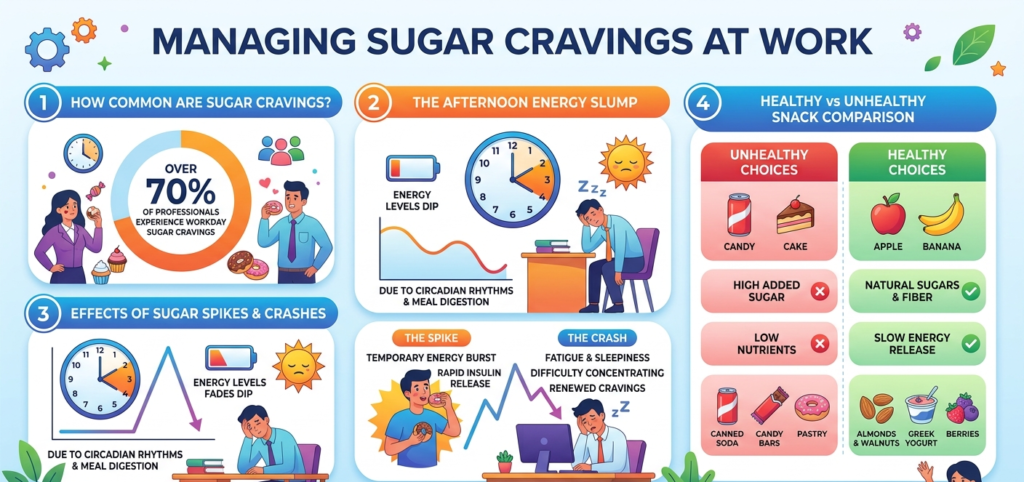
Why Do Sugar Cravings Happen at the Office?
Before learning how to stop sugar cravings, it helps to understand why they happen in the first place.
- Blood Sugar Fluctuations: When you skip meals or eat foods high in refined carbs, your blood sugar rises quickly and then crashes. That crash makes your body demand quick energy, usually in the form of sugar.
- Stress and Cortisol: Work stress increases cortisol levels. High cortisol can trigger cravings for sugary and high calorie foods because your body thinks it needs quick fuel.
- Lack of Sleep: If you are not sleeping well, your hunger hormones go out of balance. This increases cravings for sugary snacks and reduces your ability to resist them.
- Habit and Environment: Office culture plays a big role. Free snacks, birthdays, meetings with pastries, and vending machines all make sugar easily accessible.
- Dehydration: Sometimes your body confuses thirst with hunger, which can lead to sugar cravings.
Signs You Are Dealing with Sugar Cravings
Signs you are dealing with sugar cravings are given as below:
- You feel tired and reach for sweets for energy
- You crave sugar at the same time every day
- You feel irritable without sugary snacks
- You struggle to focus until you eat something sweet
- You snack even when you are not truly hungry
Recognizing these signs is the first step to managing them.
Best Strategies to Control Sugar Cravings at Work
Now let’s get into actionable tips that actually work.
1. Start Your Day with a Balanced Breakfast
One of the biggest mistakes people make is skipping breakfast or eating something sugary like pastries or sweet cereal. A good breakfast should include protein (eggs, yogurt, and peanut butter), healthy fats (nuts, seeds, avocado) and fiber (whole grains, fruits). This combination keeps your blood sugar stable and reduces mid-morning sugar cravings.
2. Eat Regular Meals and Snacks
Going too long without eating leads to energy crashes and intense cravings.
Try this: Eat every 3 to 4 hours. Include protein and fiber in each meal. Avoid long gaps between lunch and dinner
Smart snack ideas for the office: Nuts and seeds, Greek yogurt, Apple with peanut butter and Boiled eggs. These options help maintain energy without triggering sugar spikes.
3. Stay Hydrated Throughout the Day
Dehydration is one of the most overlooked causes of cravings. Keep a water bottle at your desk and aim to drink regularly. If plain water feels boring, try lemon water, herbal tea and infused water with fruits.
Tip: Drink a glass of water before reaching for a sugary snack. You might realize you were just thirsty.
4. Manage Stress Effectively
Stress eating is real, especially in office environments. Instead of turning to sugar, try deep breathing exercises, short walks during breaks, stretching at your desk and listening to calming music. Even a 5 minute break can reset your mind and reduce the urge to snack.
5. Keep Healthy Snacks Within Reach
Out of sight, out of mind works both ways. If your desk is full of candy, you will eat it. Replace sugary snacks with dark chocolate (in moderation), trail mix, protein bars with low sugar and fresh fruits. If your office has a snack area, bring your own healthier options so you are not tempted.
6. Avoid Refined Sugar and Processed Foods
Highly processed foods increase cravings instead of satisfying them. Limit candy and chocolates, sugary drinks and sodas, white bread and pastries and packaged snacks with added sugar. Read labels and look for hidden sugars like high fructose corn syrup, glucose syrup and sucrose. Choosing whole foods helps break the craving cycle.
7. Get Enough Sleep
Sleep is a major factor in controlling hunger. When you are sleep deprived your hunger hormone increases, your fullness hormone decreases and your body craves quick energy like sugar. Aim for 7 to 9 hours of sleep per night to keep cravings under control.
8. Practice Mindful Eating
Most office snacking happens out of boredom, not hunger. Before eating, ask yourself Am I actually hungry? Or am I just bored or stressed? Slow down and enjoy your food instead of eating while working or scrolling. This helps you feel satisfied with less.
9. Replace Sugar with Healthier Alternatives
Sometimes you just want something sweet, and that is okay. Healthier alternatives include fruits like bananas, apples, berries, yogurt with honey, smoothies with natural ingredients and dark chocolate instead of milk chocolate. These options satisfy your sweet tooth without causing major sugar crashes.
10. Plan Your Meals Ahead
Planning reduces impulsive decisions. Bring lunch from home when possible. This helps you to control ingredients, avoid sugary takeout meals and stay consistent with healthy eating. Meal prep is one of the best long term strategies for managing cravings.
Office Environment Hacks to Reduce Sugar Cravings
Your environment matters more than you think.
- Keep Sugary Snacks Out of Sight: Do not store candy in your desk drawer.
- Sit Away from Snack Areas: If possible, choose a desk location that is not near the kitchen or vending machines.
- Suggest Healthier Office Options: Encourage your workplace to provide healthier snacks like fruits and nuts.
- Build a Support System: If your coworkers are also trying to eat healthier, support each other.
How to Break the Sugar Addiction Cycle
Sugar cravings can sometimes feel like an addiction. To break the cycle:
- Gradually reduce sugar intake instead of quitting suddenly
- Replace sugary foods with whole foods
- Stay consistent with meals
- Track your eating habits
- Celebrate small wins
It may take a few weeks, but your cravings will decrease over time.
Common Mistakes to Avoid
Some common mistakes to avoid are given as below:
- Skipping meals
- Relying on sugary coffee drinks
- Keeping junk food at your desk
- Not drinking enough water
- Ignoring sleep and stress
Avoiding these mistakes can make a big difference.
Long Term Benefits of Controlling Sugar Cravings
When you successfully manage sugar cravings at work, you will notice:
- More stable energy levels
- Better focus and productivity
- Improved mood
- Weight management
- Better overall health
This is not just about avoiding sweets. It is about improving your daily performance and long term wellbeing.
Quick Daily Routine to Control Sugar Cravings
Here is a simple routine you can follow:
- Morning: Eat a high protein breakfast. Drink water.
- Mid-Morning: Have a healthy snack if needed.
- Lunch: Balanced meal with protein, fiber, and healthy fats.
- Afternoon: Drink water or tea. Take a short walk instead of snacking.
- Evening: Eat a proper dinner. Avoid late night sugar
Informative Statistics on Sugar Cravings and Workplace Eating Habits
Adding some data driven insights can help you better understand how common sugar cravings are and why managing them is important for productivity and health.
| Statistic | Insight | Why It Matters for Office Workers |
| Around 60% of adults report regular sugar cravings | Sugar cravings are extremely common across all age groups | You are not alone, and managing cravings is a shared challenge in workplaces |
| Energy levels drop between 2 PM and 4 PM for most people | Natural circadian rhythm causes an afternoon slump | This is when sugar cravings are strongest, so planning healthy snacks is crucial |
| High sugar intake can lead to short term energy spikes followed by crashes | Rapid blood sugar changes affect focus and mood | Leads to reduced productivity and increased fatigue at work |
| People who sleep less than 6 hours are more likely to crave sugary foods | Sleep deprivation affects hunger hormones | Poor sleep directly increases the urge for sweets during office hours |
| Drinking enough water can reduce unnecessary snacking by up to 20% | Hydration plays a key role in hunger signals | Keeping hydrated can help you avoid false cravings |
| Protein rich snacks can reduce cravings by up to 50% | Protein stabilizes blood sugar and keeps you full longer | Choosing the right snacks helps prevent impulsive eating |
| Stress increases cortisol levels, which boosts sugar cravings | Emotional eating is linked to workplace pressure | Managing stress is essential for controlling sugar intake |
| Office workers consume more added sugar than remote workers on average | Easy access to snacks and social eating habits | Environment plays a big role in eating behavior |
Final Thoughts
Controlling sugar cravings at the office is not about willpower alone. It is about building better habits, managing your environment, and understanding your body. Start small. Replace one unhealthy snack with a healthier option. Drink more water. Get better sleep. Over time, these small changes will add up and your cravings will become easier to manage. If you stay consistent, you will not only reduce sugar cravings but also improve your energy, focus, and overall health at work.
FAQs:
1. Why do I crave sugar more during work hours?
Sugar cravings often increase at work due to stress, boredom, lack of sleep, or long gaps between meals. Blood sugar dips and mental fatigue make your body look for quick energy, which usually means sugary foods.
2. What is the best snack to stop sugar cravings instantly?
Snacks that combine protein and healthy fats work best. Options like nuts, Greek yogurt, or an apple with peanut butter can quickly stabilize blood sugar and reduce cravings.
3. Can drinking water really reduce sugar cravings?
Yes, dehydration can sometimes feel like hunger or cravings. Drinking a glass of water before eating can help you determine if you are actually hungry or just thirsty.
4. Is it okay to eat something sweet at the office?
Yes, moderation is key. Instead of completely cutting out sweets, choose healthier options like fruits or a small piece of dark chocolate to satisfy your cravings without overdoing sugar intake.
5. How long does it take to reduce sugar cravings?
It usually takes a few days to a couple of weeks to notice a difference. As you reduce sugar intake and maintain balanced meals, your body gradually adapts and cravings become less intense.
