
Taking a break from exercise happens to everyone. Life gets busy, motivation drops, or sometimes injuries or health concerns force us to pause. But getting back into a fitness routine after a long break can feel intimidating. If you have been away from workouts for months or even years, the thought of lacing up your sneakers, stepping into a gym, or hitting the running trail can be overwhelming. The good news is, with the right approach, you can start exercising again safely, effectively, and even enjoyably. In this guide, we will cover step-by-step strategies, tips, and expert advice on how to start exercising after a long break.
Understand Your Starting Point
Before jumping into any workout plan, it is crucial to understand your current fitness level. If you have not exercised in a while, your stamina, strength, and flexibility may have declined. A realistic assessment helps prevent injuries and keeps you motivated. Here are a few ways to evaluate your starting point:
- Check your endurance: Try walking, jogging lightly, or using a stationary bike for 5-10 minutes and note how you feel.
- Assess your strength: Perform simple bodyweight exercises like push-ups, squats, or planks to gauge muscle endurance.
- Flexibility and mobility: Stretching or yoga poses can help determine areas that feel stiff or restricted.
Documenting these observations is helpful. Over time, tracking your progress will show how far you have come and keep you motivated.
Set Realistic Goals
One of the main reasons people struggle when returning to exercise is setting unrealistic goals. Expecting to lift the same weights, run the same distance, or perform at the same intensity as before your break often leads to frustration and burnout. Instead, focus on small, achievable goals.
Start with frequency goals, like exercising 2-3 times per week. Focus on duration goals, such as 15-30 minutes per session. Consider skill or habit goals, like completing a daily stretch routine or walking 10,000 steps a day. Breaking your goals into smaller milestones makes your fitness journey manageable and sustainable. Celebrate small victories to maintain motivation.
Choose the Right Type of Exercise
Not all workouts are created equal, and choosing the right type of exercise can make your return easier and more enjoyable. It is often recommended to mix cardiovascular exercise, strength training, and flexibility work. Here’s a closer look:
Cardiovascular Exercise
Cardio helps rebuild stamina, improves heart health, and burns calories. Ideal beginner-friendly options include brisk walking, cycling, swimming and low-impact aerobics.
Start slow, with shorter sessions, and gradually increase intensity and duration. For example, begin with 10-15 minutes of brisk walking three times a week, and slowly work up to 30-45 minutes.
Strength Training
Muscle strength diminishes with inactivity, so incorporating resistance training is important. Focus on bodyweight exercises like squats, lunges, push-ups, and planks, resistance bands or light dumbbells for added challenge and two non-consecutive days per week for recovery. Proper form is crucial, so consider instructional videos, fitness apps, or guidance from a certified trainer to reduce the risk of injury.
Flexibility and Mobility
Stretching and mobility work keeps your muscles supple, improves range of motion, and reduces soreness. Yoga or dynamic stretching routines are excellent choices. Incorporate these sessions 2-3 times per week, or even daily if time allows.
Start Slow and Build Gradually
A common mistake is jumping straight into high-intensity workouts, which can lead to injuries, excessive soreness, and frustration. Gradual progression is key to consistency. Follow these principles:
- Follow the 10 percent rule: Increase your workout duration, intensity, or weight by no more than 10 percent each week. For example, if you start by walking for 20 minutes, aim for 22 minutes the following week instead of jumping to 40. This steady progression helps prevent overuse injuries and keeps your body adapting at a healthy pace.
- Include rest days: Recovery is just as important as the workout itself. Your muscles repair and grow stronger during rest periods, not during exercise. Make sure to schedule at least 1-2 rest days per week, especially after strength training sessions. Active recovery like light walking or stretching can also help reduce stiffness without overloading your body.
- Listen to your body: Learning to recognize the difference between normal soreness and pain is essential. Mild muscle soreness, especially in the first couple of weeks, is completely normal and usually fades within a few days. However, sharp pain, joint discomfort, or lingering fatigue are signs that you may be pushing too hard. In such cases, it is better to scale back or take an extra rest day.
Consistency is more important than intensity in the beginning. Short, moderate workouts performed regularly will build a strong foundation over time.
Create a Routine That Fits Your Lifestyle
Returning to exercise is much easier if you build it into your daily life. Consistency matters more than intensity at the start. Here are some practical tips:
- Schedule workouts: Treat exercise like an appointment. Morning routines often prevent skipping sessions.
- Use reminders: Phone alarms or calendar alerts can help.
- Prepare in advance: Lay out workout clothes and shoes to remove friction.
- Incorporate movement throughout the day: Taking stairs, walking breaks, or short mobility exercises add up.
A routine that is realistic and flexible will help you stick to your plan in the long term.
Nutrition and Hydration
Exercise alone is not enough to rebuild fitness. Supporting your workouts with proper nutrition and hydration enhances recovery and results.
- Hydration: Drinking enough water is one of the easiest and most important steps. Aim to drink water before your workout to stay hydrated, take small sips during exercise if needed, and rehydrate afterward. Dehydration can lead to fatigue, dizziness, and poor performance. If your workouts are longer or more intense, you may also benefit from drinks that help restore electrolytes.
- Balanced diet: Focus on eating a variety of nutrient-rich foods. Your meals should include lean proteins like chicken, fish, eggs, or beans to support muscle repair. Add complex carbohydrates such as whole grains, oats, or brown rice for sustained energy. Healthy fats from sources like nuts, seeds, and olive oil also play a role in overall health. Do not forget fruits and vegetables, which provide vitamins, minerals, and antioxidants that aid recovery and reduce inflammation.
- Pre- and post-workout meals: Eating a light snack 30-60 minutes before your workout can boost your energy. Simple options like a banana, yogurt, or whole grain toast are easy to digest. Avoid heavy or greasy foods, as they can make you feel sluggish.
Eating well and staying hydrated improves performance, reduces fatigue, and helps prevent injuries.
Mindset and Motivation
Returning to exercise is as much mental as it is physical. Many people struggle with guilt, self-criticism, or impatience. Developing the right mindset can make the process more enjoyable.
- Focus on progress, not perfection: Every workout counts, no matter how small.
- Celebrate small wins: Completing a week of workouts, increasing your weights, or going a longer distance are all achievements.
- Find support: Working out with a friend, joining online communities, or hiring a trainer can boost accountability.
- Be patient: Fitness is a journey. It may take weeks or months to notice visible changes, but every step improves health and wellbeing.
Motivation fluctuates, but building discipline, routines, and habits ensures long-term success.
Exercise Comeback Statistics and Insights
| Category | Statistic | What It Means for You |
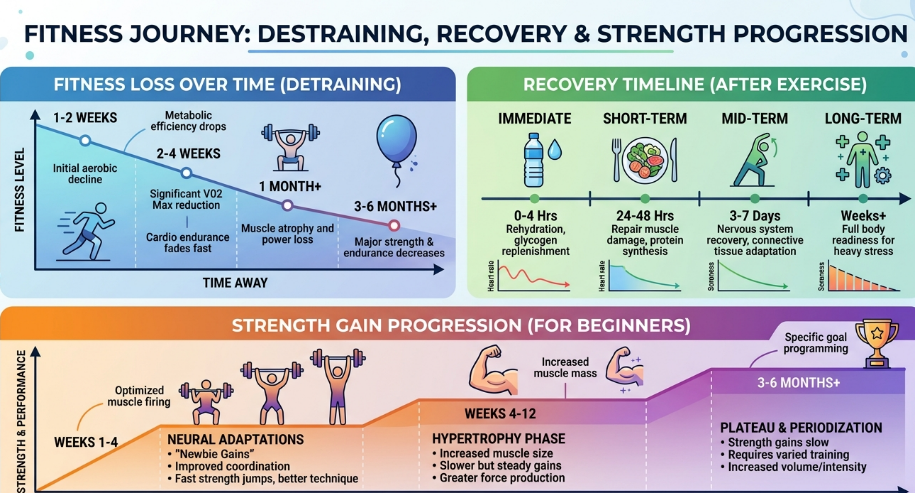
| Fitness Loss | Up to 50% of cardiovascular fitness can decline within 4-12 weeks of inactivity | Start slow, your stamina may be lower than before |
| Muscle Strength | Muscle strength can decrease by 20-30% after a few weeks of no training | Strength training is essential when restarting |
| Recovery Time | Beginners or returners may need 24-72 hours for muscle recovery | Rest days are crucial to avoid injury |
| Recommended Frequency | 2-3 workouts per week is ideal for beginners restarting fitness | Focus on consistency rather than intensity |
| Visible Progress | Most people notice improvements in 3-6 weeks | Stay patient and consistent |
| Hydration Impact | Even 2% dehydration can reduce performance by up to 20% | Drink water regularly before and after workouts |
| Injury Risk | Sudden high-intensity workouts increase injury risk by over 30% | Gradual progression is key |
| Daily Movement | 7,000-10,000 steps per day improves overall health and fitness | Walking is a great starting point |
| Strength Gains | Beginners can gain strength within 2-4 weeks of training | Early progress can be quick and motivating |
| Habit Formation | It takes about 21-66 days to build a consistent exercise habit | Stick with your routine to make it automatic |
Common Mistakes to Avoid
Even with careful planning, beginners returning to exercise can make avoidable mistakes. Here’s what to watch out for:
- Overtraining: Exercising too intensely or too often can cause injuries and burnout.
- Skipping warm-ups or cool-downs: Prepare your muscles before workouts and aid recovery afterward.
- Ignoring form: Proper technique is crucial to prevent injuries.
- Comparing yourself to others: Everyone has a unique fitness journey; focus on your own progress.
- Neglecting rest and recovery: Sleep and rest days are as important as the workouts themselves.
Awareness of these pitfalls will help you create a safe and sustainable routine.
Tracking Progress
Measuring progress keeps you motivated and ensures your workouts are effective. Tracking can include logging workouts in a notebook or app, monitoring improvements in strength, endurance, or flexibility, taking progress photos and recording body measurements or weight if relevant. Seeing your improvement over time builds confidence and reinforces healthy habits.
When to Seek Professional Help
If you have pre-existing medical conditions, injuries, or chronic pain, consult a healthcare provider before restarting exercise. A certified trainer or physical therapist can also help create a safe and effective plan tailored to your needs.
Final Thoughts
Getting back into exercise after a long break is challenging but completely achievable. The key is to start slowly, set realistic goals, choose appropriate exercises, and build consistency over time. Combine this approach with proper nutrition, hydration, and mindset strategies, and you will soon notice improvements in your energy, strength, and overall wellbeing. Remember, every small step counts, and the most important part is taking that first step today. Starting over does not mean starting from scratch. Each workout, each walk, and each stretch brings you closer to a healthier, stronger, and more active version of yourself.
FAQs:
1. How long should I exercise after a long break?
Start with 15-30 minutes per session, 2-3 times a week, and gradually increase duration and intensity as your fitness improves.
2. Is it normal to feel sore after restarting exercise?
Yes, mild muscle soreness is normal. It usually fades within a few days. Severe pain may indicate improper form or overtraining.
3. Can I do high-intensity workouts immediately?
No. Begin with low to moderate intensity and gradually progress to avoid injury and burnout.
4. How quickly will I see results after resuming exercise?
Visible results vary, but improvements in energy, endurance, and strength can appear within 3-6 weeks with consistent effort.
5. Do I need special equipment to get back in shape?
No. Bodyweight exercises, walking, and stretching are effective. Equipment like dumbbells or resistance bands can enhance workouts but is optional.
